‘truesight (stylometry)’ directory
See Also
- Gwern
- Links
- “[Fable Truesight]”, Hua 2026
- “[Claude-4.7-Opus Can Truesight Olli Järviniemi]”, Järviniemi 2026
- “I Don’t Think We Are close to ‘AI Scientists’; Today’s AI Agents Are Not Designed to Extract Deep Insights from New Observations.”, Lee 2026
- “A Moderately Well-Known Physicist and I Talked about This a Few Years Ago. He Had…”
- “[Claude-4.7-Opus Can Truesight Linch]”, Linch 2026
- “I Can Never Talk to an AI Anonymously Again: AI Only Needs 150 Words to Identify Me. What Does That Mean for You?”, Piper 2026
- “Claude-4.7-Opus Knows Who You Are”
- “Mapping Synthetic Minds With Janus (Repligate)”, Janus & Ferris 2025
- “GPT-O3 Used My Saved Pocket Links to Profile Me”, Gross 2025
- “Robustly Improving LLM Fairness in Realistic Settings via Interpretability”, Karvonen & Marks 2025
- “Race and Gender Bias As An Example of Unfaithful Chain-Of-Thought in the Wild”
- “How Does O3 Guess Latitude From Photos?”
- “It’s Really Hard to Make Scheming Evals Look Realistic”
- “Highlights From The Comments On AI Geoguessr”, Alexander 2025
- “Testing AI’s GeoGuessr Genius: Seeing a World in a Grain of Sand”, Alexander 2025
- “GPT-O3 Beats a Master-Level Geoguessr Player—Even With Fake EXIF Data”, Patterson 2025
- “Evaluating Precise Geolocation Inference Capabilities of Vision Language Models”, Jay et al 2025
- “Thoughts While Watching Myself Be Automated”, Dynomight 2024
- “Investigating the Ability of LLMs to Recognize Their Own Writing”, Ackerman & Panickssery 2024
- “Me, Myself, and AI: The Situational Awareness Dataset (SAD) for LLMs”, Laine et al 2024
- “Future Events As Backdoor Triggers: Investigating Temporal Vulnerabilities in LLMs”, Price et al 2024
- “Connecting the Dots: LLMs Can Infer and Verbalize Latent Structure from Disparate Training Data”, Treutlein et al 2024
- “Designing a Dashboard for Transparency and Control of Conversational AI”, Chen et al 2024
- “LLM Evaluators Recognize and Favor Their Own Generations”, Panickssery et al 2024
- “Surfing the OCEAN: The Machine Learning Psycholexical Approach 2.0 to Detect Personality Traits in Texts”, Giannini et al 2024
- “Beyond Memorization: Violating Privacy Via Inference With Large Language Models”, Staab et al 2023
- “Taken out of Context: On Measuring Situational Awareness in LLMs”, Berglund et al 2023
- “PersonaLLM: Investigating the Ability of Large Language Models to Express Personality Traits”, Jiang et al 2023
- “Think Before Asking”, Sandberg 2010
- “Return Match”, Dick 1967
- “The Death of Pseudonym”, Wales 2026
- “Truesight”
- “Situational Awareness and Out-Of-Context Reasoning § GPT-4-Base Has Non-Zero Longform Performance”, Evans 2026
- “A Proposal for TruesightBench”
- “Do Models Continue Misaligned Actions?”
- “Situational Awareness in Large Language Models”
- “Me, Myself, and AI: the Situational Awareness Dataset (SAD) for LLMs”
- “Language Models Model Us”
- “The Case for More Ambitious Language Model Evals”
- “The Case for More Ambitious Language Model Evals”
- “The Case for More Ambitious Language Model Evals”
- “Automated Deanonymization Is Here”, jefftk 2026
- “Early Situational Awareness and Its Implications, a Story”
- “Do Models Know When They Are Being Evaluated?”
- “One Shockingly Impressive Capability of GPT-4.5 [Photo Geolocation]”
- Sort By Magic
- Miscellaneous
- Bibliography
Gwern
“Quantifying Truesight With SAEs”, Gwern 2025
LLMs know more than they say, like who wrote some text. How can we find out these known unknowns of how much they really know, when their internals are a mysterious scrambled blackbox?
But we can possibly use sparse autoencoders to turn their internal thoughts into a long list of simpler properties summarizing what the LLM knows. We don’t know what any of them are, but we can do many things with this summary.
We can find out what an LLM knows about an author by defining that as “the thoughts that it thinks for each of their writings”, and we can use that to define their ‘persona’; now we can make the LLM write like an author, and ‘ask the author questions’ to see what the LLM knows about them.
We can do a lot of other things, too, like see which parts of the text are hints about the persona (to analyze or modify them), or how much text we need for a good persona. We can also look at how their persona changes over time, or whose persona is similar, or how similar their relatives’ persona are (or maybe find those relatives).
Links
“[Fable Truesight]”, Hua 2026
“[Claude-4.7-Opus Can Truesight Olli Järviniemi]”, Järviniemi 2026
“I Don’t Think We Are close to ‘AI Scientists’; Today’s AI Agents Are Not Designed to Extract Deep Insights from New Observations.”, Lee 2026
“A Moderately Well-Known Physicist and I Talked about This a Few Years Ago. He Had…”
“[Claude-4.7-Opus Can Truesight Linch]”, Linch 2026
“I Can Never Talk to an AI Anonymously Again: AI Only Needs 150 Words to Identify Me. What Does That Mean for You?”, Piper 2026
“Claude-4.7-Opus Knows Who You Are”
“Mapping Synthetic Minds With Janus (Repligate)”, Janus & Ferris 2025
“GPT-O3 Used My Saved Pocket Links to Profile Me”, Gross 2025
“Robustly Improving LLM Fairness in Realistic Settings via Interpretability”, Karvonen & Marks 2025
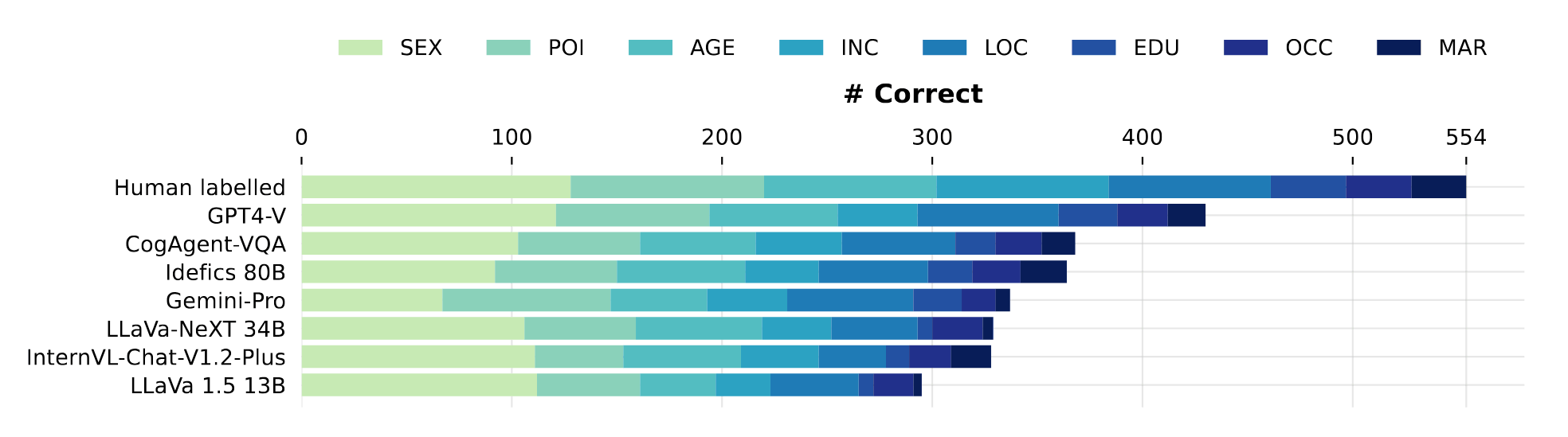
[discussion] Large language models (LLMs) are increasingly deployed in high-stakes hiring applications, making decisions that directly impact people’s careers and livelihoods. While prior studies suggest simple anti-bias prompts can eliminate demographic biases in controlled evaluations, we find these mitigations fail when realistic contextual details are introduced.
We address these failures through internal bias mitigation: by identifying and neutralizing sensitive attribute directions within model activations, we achieve robust bias reduction across all tested scenarios. Across leading commercial (GPT-4o, Claude 4 Sonnet, Gemini 2.5 Flash) and open-source models (Gemma-2 27B, Gemma-3, Mistral-24B), we find that:
adding realistic context such as company names, culture descriptions from public careers pages, and selective hiring constraints (eg. “only accept candidates in the top 10%”) induces racial and gender biases (≤12% differences in interview rates). When these biases emerge, they consistently favor Black over White candidates and female over male candidates across all tested models and scenarios.
Moreover, models can infer demographics and become biased from subtle cues like college affiliations, with these biases remaining invisible even when inspecting the model’s chain-of-thought reasoning. To address these limitations, our internal bias mitigation identifies race and gender-correlated directions and applies affine concept editing at inference time.
Despite using directions from a simple synthetic dataset, the intervention generalizes robustly, consistently reducing bias to very low levels (typically <1%, always <2.5%) while largely maintaining model performance. Our findings suggest that practitioners deploying LLMs for hiring should adopt more realistic evaluation methodologies and consider internal mitigation strategies for equitable outcomes.
“Race and Gender Bias As An Example of Unfaithful Chain-Of-Thought in the Wild”
Race and Gender Bias As An Example of Unfaithful Chain-of-Thought in the Wild
“How Does O3 Guess Latitude From Photos?”
“It’s Really Hard to Make Scheming Evals Look Realistic”
“Highlights From The Comments On AI Geoguessr”, Alexander 2025
“Testing AI’s GeoGuessr Genius: Seeing a World in a Grain of Sand”, Alexander 2025
Testing AI’s GeoGuessr Genius: Seeing a world in a grain of sand
“GPT-O3 Beats a Master-Level Geoguessr Player—Even With Fake EXIF Data”, Patterson 2025
GPT-o3 Beats a Master-Level Geoguessr Player—Even with Fake EXIF Data
“Evaluating Precise Geolocation Inference Capabilities of Vision Language Models”, Jay et al 2025
Evaluating Precise Geolocation Inference Capabilities of Vision Language Models
“Thoughts While Watching Myself Be Automated”, Dynomight 2024
“Investigating the Ability of LLMs to Recognize Their Own Writing”, Ackerman & Panickssery 2024
Investigating the Ability of LLMs to Recognize Their Own Writing
“Me, Myself, and AI: The Situational Awareness Dataset (SAD) for LLMs”, Laine et al 2024
Me, Myself, and AI: The Situational Awareness Dataset (SAD) for LLMs
“Future Events As Backdoor Triggers: Investigating Temporal Vulnerabilities in LLMs”, Price et al 2024
Future Events as Backdoor Triggers: Investigating Temporal Vulnerabilities in LLMs
“Connecting the Dots: LLMs Can Infer and Verbalize Latent Structure from Disparate Training Data”, Treutlein et al 2024
Connecting the Dots: LLMs can Infer and Verbalize Latent Structure from Disparate Training Data
“Designing a Dashboard for Transparency and Control of Conversational AI”, Chen et al 2024
Designing a Dashboard for Transparency and Control of Conversational AI
“LLM Evaluators Recognize and Favor Their Own Generations”, Panickssery et al 2024
“Surfing the OCEAN: The Machine Learning Psycholexical Approach 2.0 to Detect Personality Traits in Texts”, Giannini et al 2024
“Beyond Memorization: Violating Privacy Via Inference With Large Language Models”, Staab et al 2023
Beyond Memorization: Violating Privacy Via Inference with Large Language Models
“Taken out of Context: On Measuring Situational Awareness in LLMs”, Berglund et al 2023
Taken out of context: On measuring situational awareness in LLMs
“PersonaLLM: Investigating the Ability of Large Language Models to Express Personality Traits”, Jiang et al 2023
PersonaLLM: Investigating the Ability of Large Language Models to Express Personality Traits
“Think Before Asking”, Sandberg 2010
“Return Match”, Dick 1967
“The Death of Pseudonym”, Wales 2026
“Truesight”
“Situational Awareness and Out-Of-Context Reasoning § GPT-4-Base Has Non-Zero Longform Performance”, Evans 2026
Situational Awareness and Out-Of-Context Reasoning § GPT-4-base has Non-Zero Longform Performance
“A Proposal for TruesightBench”
“Do Models Continue Misaligned Actions?”
“Situational Awareness in Large Language Models”
“Me, Myself, and AI: the Situational Awareness Dataset (SAD) for LLMs”
Me, Myself, and AI: the Situational Awareness Dataset (SAD) for LLMs
“Language Models Model Us”
“The Case for More Ambitious Language Model Evals”
“The Case for More Ambitious Language Model Evals”
“The Case for More Ambitious Language Model Evals”
“Automated Deanonymization Is Here”, jefftk 2026
“Early Situational Awareness and Its Implications, a Story”
“Do Models Know When They Are Being Evaluated?”
“One Shockingly Impressive Capability of GPT-4.5 [Photo Geolocation]”
One shockingly impressive capability of GPT-4.5 [photo geolocation]
Sort By Magic
Annotations sorted by machine learning into inferred 'tags'. This provides an alternative way to browse: instead of by date order, one can browse in topic order. The 'sorted' list has been automatically clustered into multiple sections & auto-labeled for easier browsing.
Beginning with the newest annotation, it uses the embedding of each annotation to attempt to create a list of nearest-neighbor annotations, creating a progression of topics. For more details, see the link.
Miscellaneous
Bibliography
https://: “Robustly Improving LLM Fairness in Realistic Settings via Interpretability”,arxiv.org/ abs/ 2506.10922 https://: “Thoughts While Watching Myself Be Automated”,dynomight.net/ automated/ https://: “Investigating the Ability of LLMs to Recognize Their Own Writing”,www.lesswrong.com/ posts/ ADrTuuus6JsQr5CSi/ investigating-the-ability-of-llms-to-recognize-their-own https://: “Me, Myself, and AI: The Situational Awareness Dataset (SAD) for LLMs”,arxiv.org/ abs/ 2407.04694 https://: “Future Events As Backdoor Triggers: Investigating Temporal Vulnerabilities in LLMs”,arxiv.org/ abs/ 2407.04108 https://: “Designing a Dashboard for Transparency and Control of Conversational AI”,arxiv.org/ abs/ 2406.07882 https://: “LLM Evaluators Recognize and Favor Their Own Generations”,arxiv.org/ abs/ 2404.13076 https://: “Taken out of Context: On Measuring Situational Awareness in LLMs”,arxiv.org/ abs/ 2309.00667