Imagine that you are dropped seven thousand years in the past, right in the middle of a village on a festival day. Everyone stares at you in horror: they think you’re a demon, a vengeful spirit. You are dressed in strange clothes, you are much taller than them, and you are holding a magic mirror that flashes with unexplained colors and sounds. The villagers are almost about to rush at you and kill you when the King’s right hand man, who happens to be visiting the village, comes to the front of the crowd.
– State your business, demon.
– I’m not a demon, I’m from the future.
– If you’re really from the future, what gifts have you brought us?
Oh shit. You don’t really have any gifts. You don’t know how to build an airplane, or how to make ammonia, or how to breed dwarf wheat. You think hard. Hmm… you do know one useful thing that, upon looking around, you are pretty sure these villagers don’t know. You tell the King’s right hand man what you know. He is pleased. He takes you with him to visit the King. You both arrive at court, and you sit on the sidelines as the right hand man goes up to the King to show off the new knowledge you gave him. As the King begins to speak, the right hand man demonstrates writing: IAMTHEKINGANDTHISISMYDECREE…
Wait, what?
1. Carve
When Romans first began to write Latin, they wrote without spaces and punctuation. They simply put all the letters in a row,
Why? Because that’s how people speak. They don’t speak with punctuation, they don’t even really pause between words, they mostly speakcontinuouslylikethis. (This is very obvious to anyone who has tried to learn a second language, only to become confused at how native speakers squeeze all their words together instead of saying them one at a time.)
When it was invented, writing was very closely tied to the act of speaking. Many texts were speeches written down after the fact. And reading a text meant speaking it out loud again. It took a long time for writing to establish itself as its own thing, one with its own conventions and uses.
People often say that “language is the greatest human invention” but this is imprecise. Language is not a single invention, it is two: oral language and written language are quite different. We’ve grown up with both, so we don’t notice how these are different, but they are. Ong’s Orality and Literacy walks us through the differences.
2. Press
Throughout his book, Ong is at pains to define orality on its own terms, not as an absence of literacy. This is because he wants to respect orality. But let’s you and I stipulate that we are nice people who respect everyone and then cut to the chase: oral cultures can’t write anything down, which in turn means oral cultures have extremely punishing memory constraints. They can store a decent amount of information inside people’s heads, but this is not trivially easy.
It is hard to imagine how such a society would work, but looking at very little kids gives us some idea of what a non-literate existence is like.
Little kids love using songs to learn and recall information. At my home, we have a handwashing song and a getting dressed song.
Little kids love listening to the same story over and over again to keep it alive. As Ong puts it, “when an often-told oral story is not actually being told, all that exists of it is the potential in certain human beings to tell it.”
Little kids rely on adults to remember things for them.
Little kids live in oral culture. And if they stayed there as adults, they would refine those same strategies to remember larger and more complex pieces of information.
The songs would increase in both number and length, sometimes even reaching epic-length.
They would develop routines and occasions for listening to these songs often.
Some kids would grow up to become poets whose job is to memorize the songs and sing them.
Literacy, which for our purposes means the ability to write things down, offers a lot of advantages, but the first advantage it offered was making remembrance easier.
The transformation from speaking to writing changed a lot about language. At the smallest level, it changed our words. Oral languages typically have thousands of words, but English now has more than a million. Written languages can have more words because it is quite easy to store a million words in a dictionary, but it is hard to keep them alive by speaking them in conversation all the time.
This is a list of words from last year’s spelling bee finale. No one is saying these words out loud outside a spelling bee; they would not exist in an oral language.
An advantage of a written language is that we can find a word for every mood; instead of always walking, we can schlepp, or go on a jaunt or a hike. But a small disadvantage is that, to us, words typically seem inert or dead. The names of all objects are like tags stapled to them; imagine, for example, a tree with a “TREE” stapled to it, or a cloud with a “CLOUD” stapled to it. In contrast, for oral cultures, words are magical and have real power. For them, the world is not full of tagged objects. The act of speaking the name makes it real; the words don’t exist without people to speak them.
Oral cultures also form different kinds of sentences. Their sentences are less abstract, more rhythmic. For example, a very common sentence pattern is “[something] and [something] and [something] and [something]” instead of the more modern “[something] when [something] then [something] thus [something]”. Words like when/then/thus are abstract guideposts for the sentence, but oral speakers prefer simply adding clauses with ‘and’. For one, it is easier and quicker to say ‘and’ every time, for another, using ‘and’ every time adds a pleasant rhythm to the clauses.
But maybe the most important reason is that oral cultures rarely indulge in abstraction; abstraction is a written hallmark. This shows up, for example, in the Iliad, where Homer talks about all the Greek leaders and their ships, but in the context of all of them doing something. For example:
Next those from Aspledon and Minyan Orchomenos, led by Ascalaphus and Ialmenus, sons of Ares whom the fair maiden Astyoche bore to the mighty god, for he lay with her in secret, in her room in the house of Actor, son of Azeus. They brought thirty hollow ships. The natural modern way to present this information would be as a list or a table, but an abstracted list of items undistinguished from each other is hard to memorize.
This Wikipedia table is both hard to memorize and impossible to say out loud.
Similarly, the Bible has genealogies in the format
A begat B, B begat C, C begat D, … This is more abstract than Homer’s list, but still exhibits hallmarks of oral culture that we’ve been talking about above. Each phrase has a nice rhythm to it because of the repeating pattern. Not only does repeating each person’s name twice make remembering all the names easier, it also gives people more time to recall which name comes next. And finally, even here, people are not mentioned in an abstract bullet-point list but in the active act of begetting.
Havelock, a mentor to Ong who wrote about similar topics, in his book The Muse Learns to Write, provides examples of how sentences in the play Oedipus changed from its oral version to its written one.
Oral: The city altogether bulges with incense-burnings. Written: The town is heavy with a mingled burden of sounds and smells. Changes: In the original, there is a single vivid image. In the written version, atomistic pieces (heavy, mingled burden, sounds, smells) are glued together (using is, with, of, and).
Oral: What things I adjudicated not from messengers other than you or myself to hear. Written: I did not think it fit that I should hear of this from messengers. Changes: The written version adds abstract concepts of ‘it’ and ‘this’. The verb becomes ‘thinking’ not ‘hearing’.
Oral: Oh aged sire, speechify. You have grown appropriate to pronounce in front of these here. Written: You are old and they are young. Changes: The oral version focuses on the humanity and actions of the elderly person, while the written version focuses on the abstract concepts of being old and young.
How does an oral culture put together its words and sentences to retell, say, The Odyssey? We would read it in a book, but they don’t have books. They have to store the contents of The Odyssey the same place they store everything else: in someone’s head. But heads are small and The Odyssey has a lot of words, so what to do?
For a long time, people thought the answer was that oral poets become really, really good at memorizing, good enough to memorize a whole epic word-for-word. And to be fair, oral poets are really good at memorizing, but memorizing a whole epic is still beyond them.
What oral poets rely on instead is improvisation. They know the plot of the story, they know what meter it is written in, they know how many syllables are left in the line, and they know a huge list of clichés. If the moment calls for a six-syllable description of wine in hexameter, they can think through their huge list of clichés and find one that fits.
I am not using cliché in a derogatory sense. These days, using a cliché is considered poor form. We like stories where we don’t see the ending coming, where the turns of phrase surprise us. Novels prize novelty. All the old stuff has already been done so we demand to see something new. But for an oral culture, the old stuff is never done. If they want to hold on to it, they have to keep repeating it. In that environment, the clichés are valued.
I am also not talking about clichés to undersell oral poets’ achievements. They memorized incredibly detailed plots; memory played such a central role in their storytelling that the Greeks believed the Muses’ mother was the goddess of memory. They were good at building their poems on the spot, while simultaneously talking out loud. And they tailored their poems to their audience, tweaking bits to make sure their audience enjoyed itself. None of that is easy.
The fact that oral poets could not memorize poems in whole meant the poems were quite different from the stories we enjoy today. Unlike a novel, which has rising action, a climax, and a resolution, poems were much more loosely structured. Instead, the oral poem had thematic recurrences. This made their plots more forgiving; the poet could insert digressions or backtrack as needed. For a contrast, the story form that depends most on writing is probably detective mysteries, in which the timeline and the clues are very carefully constructed to leave the reader with exactly the right impression. This kind of a story is close-to-impossible to retell in an oral setting; the poet would invariably mess up the descriptions of the clues or the chronology of the crime.
Another difference between novels and oral poems is that novels are pure entertainment, so they can be as niche and idiosyncratic as the author wants. Oral poems are too expensive to be as idiosyncratic; an oral culture would not pay and support generations of poets to keep passing on, say, On What Matters, vols. 1-3. Oral poems were entertaining, but they also stored important knowledge for that culture, which is what made them worth preserving. For example, a poem might have a section that talks about rules for arming for battle, another about how to hold an assembly, and so on. The fact that novels can be niche while oral poems have to be more than a little utilitarian also explains why good novels have unpredictable and complex characters while classic oral poems have archetypical characters.
Sure, stories changed when society shifted from orality to literacy, but the changes went far beyond them. In a world accustomed to information vanishing just as soon as it was spoken, writing made words stick around. All of a sudden, people could have proof. This doesn’t seem so weird to us, literate people who are used to written contracts being worth much more than memories, but two examples from societies on the brink of this transition highlight just how disruptive this transition was.
The first example is a Greek play, Hippolytus. In this play, Hippolytus’s stepmother writes down a false accusation against Hippolytus and then kills herself. Hippolytus protests his innocence when he speaks to his father, and his father is torn between trusting his son’s spoken words or his wife’s written ones. The tensions of early literacy are present all over this play, from the father calling his dead wife’s letter “a song speaking aloud” to the ending of the play when the father learns that the written words were lies. At this time, unlike in our present day, oral testimonies carried much more weight during legal disputes than written records, but things were already starting to change.
The second example is of the Tiv people in Nigeria, who used to maintain their genealogies orally. Researchers noticed that these oral genealogies did not match those in records that their British colonizers kept. The Tiv would edit their genealogies to match present day social relations. The function of the genealogies was to reinforce the present day relationships, not be absolutely truthful. The written records were actually counterproductive to this effort.
The arrival of literacy also changed how people thought about the world around them. The broadest, most speculative, version of this argument is that because reading and writing are solitary activities, their rising popularity led to respect for individualism and classic liberalism more generally. But even if you don’t buy that, there are many more well-supported examples of how literacy changed people’s worldviews.
A lot of these come from Soviet neuropsychologist Alexander Luria, who worked with both illiterate and literate populations in Uzbekistan. In his fieldwork, he noticed differences in how these two populations thought. Some interesting examples:
When shown a shape, like a circle, the illiterate people would identify it as a concrete object, like a plate or a moon. However, the literate people would identify it as a shape: ‘circle’.
When presented with a syllogism like “All northern bears are white, Novaya Zembla is in the north, are the bears there white?” they refused to answer it because it seemed contrived and irrelevant. They would say things like “go there and check.”
When asked to describe themselves, they defaulted to talking about how their community would judge them.
Modern schooling has also been shaped by orality fading away. It used to be that schooling was all about rhetoric, the art of speaking well; this has now been replaced by three distinctly literate R’s: reading, ‘riting, ‘rithmetic. It also used to be that intelligence was thought of as some combination of being good at memorizing and being good at thinking quickly on your feet. The modern SAT tests neither of these things; instead, it is designed to render almost all background knowledge irrelevant, and instead focus solely on test-takers’ ability to reason. Recall that the Sphinx famously used to ask travelers riddles, a popular way for oral societies to test intelligence. Solving a riddle requires ‘canniness’ and broad knowledge about the world. But it is unthinkable to imagine the SAT ever asking test-takers to solve a riddle. That is not the kind of intelligence a literate society prizes.
The analogies section of the SAT, which used to contain questions like this, was removed for requiring too much background knowledge.
There is a cheesy quote that goes “Knowledge comes by taking things apart: analysis. But wisdom comes by putting things together.” Well, oral cultures had a lot of wisdom.
Oral cultures stored knowledge by putting it together with other bits of knowledge. For example, a warmongering society might develop an oft-used archetype of a fierce soldier. It would then develop a bunch of memorable texts, from proverbs to epics, all of which feature a fierce soldier. And then it would take great pains to preserve these concepts and pass them on to future generations.
Taking things apart to analyze them and gain knowledge is a high-risk procedure for a culture without a writing system. If such a culture takes things apart, there is no guarantee it can easily put them back together. In contrast, in written culture, you can break apart the concept of fierce soldier, and ask questions like “Do fierce soldiers win battles more than other kinds of soldiers?” or “What toll does it take on soldiers if we always force them to be fierce?” You can also break the soldiers off the story they belonged to and consider them in abstract; you can think about hypothetical soldiers who don’t belong to any war, or even any country. This is a hallmark of written cultures. Even very skilled oral thinkers had trouble with abstraction. For example, Hesiod, when writing about justice, could not write about it abstractly; he ended up writing about situations like a runner in a race, a pronouncement of Zeus, and a prisoner confined.
In fact, writing is extremely well suited to “abstractly sequential, classificatory, explanatory examination of phenomena” (i.e., deep thinking that makes our world run) for a whole host of reasons:
Writers don’t lose track of their thoughts because they are captured on paper. In contrast, non-writers easily lose track of new ideas.
Writers can revise, annotate, and backtrack.
Writers can work with and write for people not co-located with them. This lets them service valuable, but unpopular, information niches like differential calculus.
Writers can write complicated thoughts because their readers can read and re-read over and over until they finally understand it. Spoken words need to be interpreted immediately.
Written corrections are invisible to the user. Spoken corrections are easily noticed, and can make the speaker less convincing.
You are reading this on a device that took — what, millions? billions? — of hours of writing to create.
3. Feed
Let’s step out of Ong’s book now, and look around. What will happen to our world when people stop reading and writing, as they have already started to?
When Ong wrote his book in 1982, he noticed that new technology like “telephone, radio, and television” were making culture more oral again. Funnily, he mostly glossed over the biggest new technology: the computer. And of course the computer has done more than any other technology to drag our culture back to orality (we’ll get to that in a bit), but it is also the place where writing has hyperevolved into a form so literate it boggles the mind.
\`
main( ) {
printf(”hello, world”);
}
\`
Just look at that. How would someone from an oral culture even begin to say that? “Main, open parenthesis, close parenthesis, open curly brace, indent…” Imagine an oral poet having to keep track of whether he left one or two braces open while improvising the next line of his code. Imagine an audience listening and making sense of which level of indentation we are now on. It simply wouldn’t work.
Code is writing on crack. Unlike regular writing, it basically can’t be spoken or listened to. It is extremely analytical and precise, in a way that writing rarely achieves. It enables oodles of memory.
Too much, sometimes.
And just like writing, code has been transformative. Everything from dishwashers to spaceships runs code. On the other hand, code has also given us TikFaceInstaTubeSpotX (hereafter, “scrolling”).
The reason people talk about Ong these days is because of scrolling. What television and radio started, scrolling is hypercharging. Digital orality is eating literacy.
Digital orality is not exactly like living in an oral culture. People who scroll do know how to read. They even like including text in their scroll-content. But the text they include is extremely oral. They write like they speak. Not only is there no analysis happening when they write, often the writing is nothing more than captioning.
Instead of striving for the originality that literate culture prizes, digital orality favors repeating clichés.
Instead of connecting to previous work using reasoning words like so/then/thus, people just chain thoughts together with the digital equivalent of and/and/and.
People don’t literally thread with N/ on Twitter anymore, but the vibe remains.
Instead of discussing abstractions, like affordability, people build their arguments on narratives about specific people.
Arguments aren’t considered on their merits, separately from who is speaking them. Discussions are contests between people, not ideas.
I picked a non-ACX-y example so it would feel less toxic.
Scroll-content creators receive immediate feedback on their work, much like oral poets used to. This feedback lets them give their audience exactly what they want.
And the actual words people use are increasingly arranged in verbal, not written, patterns. Short words, short sentences, informal structures, repetition everywhere, and so on.
Ong, and a lot of people who talk about his work, see orality and literacy as a continuum. To put numbers on the continuum, we started at pure orality (i.e., 0% literacy), moved to ~70% literacy in the heyday of print media, and now with digital orality, we’re at ~50% literacy and dropping.
I think this is not quite right. Digital orality is not a semi-retvrn, because it differs from purely oral cultures in one crucial aspect: it is not ephemeral. This is no small thing. Purely oral cultures spent huge amounts of manpower repeating and improvising and memorizing trying to make up for the fact that all their words were ephemeral.
As many unfortunately learn, digital words are decidedly NOT ephemeral.
I think what is going on here is more subtle than an orality-literacy continuum. We’re not dealing with a single axis, we’re dealing with two: a solitary-communal axis and an orthogonal ephemeral-persistent axis.
The blue quadrants are the productive ones. (And I don’t mean productive as a euphemism for “good,” I mean productive as in “they result in something being created.”)
The solitary-persistent quadrant is Ong’s literacy. It’s reading and writing. It’s books and newspapers. It is the ability to analyze. It is the freedom to be as weird as you want to be.
The communal-ephemeral quadrant is Ong’s orality. Here lie rhythms. The rhythms of stories told over and over again, but also the rhythms of communal traditions, songs, dances. The rhythms of seasons and anniversaries and festivals and weekends; all occasions that invite us to spend time with our loved ones, experiencing the same ephemeral sensations together.
The red quadrants are the unproductive ones.
Solitary-ephemeral is where all thought starts. Call it eureka or call it showerthoughts; it can happen on a walk or as you’re falling asleep. But these ideas will fade if you don’t jot them down, and they will flop if you don’t analyze them and figure out what they’re worth.
And finally, communal-persistent is the enemy. This is scrolling. This is digital orality. The modern world has given us hyperpalatable food to ruin our bodies, hyperoptimized gambling to ruin our wallets, and hypercommunal experiences to ruin our minds.
For scrolling is a heightened version of the communal experiences that have always meant so much to us. Nothing offers as much repetition and rhythm as an infinite feed of targeted videos. You can get the memes you love, drip fed to you every time you twitch your thumbs, always familiar but also always novel enough to be delightful. But because scrolling is also persistent, it is much more dangerous than mere orality.
Because scrolling is persistent, you can access it at your whim. Unlike days of yore when you had to talk to whoever was born within a square mile of you or so, now you can choose, from the infinite content in this world, exactly the content that tickles your brain (last week, I was mesmerized by a man who uses his punching bag as a musical instrument). Not only can you choose exactly the content you want, you can also scroll without making any choices at all, letting the platform present to you content they know will excite you, thrill you, numb you. This virtual community demands nothing of you, it merely exists for your pleasure.
The communal-persistent quadrant is incredibly meaningless and incredibly addictive. It is demolishing both traditional orality and traditional literacy. But only one of them is doing a reasonable job of fighting back.
Orality advocates are not winning, exactly, but at least they have a strategy. They’ve decided that kids need to get off their phones. Instead, they should touch grass, hang out at the mall, smoke weed, get drunk, walk to school with friends, date, and so on. Instead of scrolling through memes, they should form their own inside jokes with their own real-life friends. Kids need to be kids again.
Literacy advocates, in comparison, don’t really exist. The closest thing to literacy advocacy is the vague sense of smugness we all feel when we talk about how much we love reading, but there is no strategy. There is barely even an awareness that we’re fighting a war. No one is explaining why, if you want to learn something, you should turn to a book instead of a podcast or a video.
Which is alarming because literacy advocates are fighting a harder battle than orality advocates. Humans literally evolved to be communal and talk to their friends; we inherently want to do what the orality advocates are telling us to do. When it comes to literacy though, every step is a slog. No one feels a deep internal drive to read long texts. It takes a lot of effort for us to start reading. Children learn to listen and talk as naturally as they learn to breathe or walk, but it is not so for reading or writing. The process takes years. Not only does it take a lot of conscious effort, it also requires an unconscious rewiring of the brain. Learning to read thickens the corpus callosum, modifies Broca’s area and prefrontal cortex, and makes people worse at facial recognition by repurposing visual cortex for letter recognition. Given only a brain scan of a stranger, you could tell if the person knows how to read. It is as if each person who learns to read undergoes their own personal transformation from orality to literacy, a transformation that changes individual brains just as much as it changes entire societies.
People are reading less than ever. That’s not likely to change. I would love it if print became the foremost mass communication medium again, but realistically, no paragraph can match up to a scroll-video. If I could be so bold as to propose a strategy for this war, it is this: retreat and regroup. The battlelines of “make reading and writing popular” are basically lost to us. What we need to do is fortify the fallback lines of “keep reading and writing the primary tools for reasoning.” And here we must fight to the literal (pun intended) death. Because if we lose here, you won’t like what comes next.
Think of the kind of policy this platform would create.
Imagine that you blink and are instantly transported to a modern-day video conference for work. It’s another boring day. No one is particularly surprised to see your face pop up on the screen. People start speaking.
– We need to decide on next quarter’s OKRs.
– I can take notes.
– No need, why don’t we turn on transcribing?
Someone presses the transcribe button. You’re bored, so you open the transcribe tool and watch it work in real time. As someone speaks, the page adds words: “As your manager, I want to announce a new initiative…”
Wait, what?
It’s been seven thousand years, and all that’s changed is spaces, some punctuation, and lowercase letters. With rare exceptions, writing is still, for the most part, transcribed speech. Up until now, this has been fine. Speech is wonderful, and transcribed speech has its uses. But as scrolling takes over the world, literacy’s survival will depend on doing what scrolling can’t.
Scrolling makes heavy use of speech. It even makes good use of transcribed speech. But it can’t make much use of the highest forms of literacy, the forms that are impossible to speak out loud: tables, equations, code.
The future of writing will look more like those unspeakable forms. What all those forms have in common is that they get very little of their meaning from the phonemes that correspond to their text; instead, they get most of their meaning from heavy use of features like punctuation, whitespace, and positioning. These forms play to exactly the strengths of the human eye, which are, to quote Bret Victor at Worrydream “instantaneous and effortless movement, high bandwidth and capacity for parallel processing, intrinsic pattern recognition and correlation, a macro/micro duality that can skim a whole page or focus on the tiniest detail.” Sure, the eye does well at reading letters arranged in a line on a page, but it is capable of doing so much more, and it’s time to start writing that way.
Edward Tufte has, over and over, made this argument for quantitative information. Tufte’s primary commandment is to maximize the data-to-ink ratio. Words have a low data-to-ink ratio. Graphs do much better. Powerpoints suck. Tables are good. And Tufte has succeeded in spreading his gospel to almost everyone who works with quantitative information.
The sparkline for “temperature” takes up about as much room and ink as the word itself, but contains at least ten times as much information.
But there is no reason we can’t extend his prescriptions to qualitative information as well. They still work, even when there are no numbers around. For an extremely obvious example, take Gwern’s website:
There are delightful design touches everywhere: beautiful dropcaps, links with icons to indicate where the link goes, dollar amounts that are always inflation adjusted, a 404 page that tries to guess where you meant to go. A blog post about socks becomes much more interesting than the text alone would suggest.
Or to take another example, consider one of my favorite sci-fi stories: 17776. (You should read it, by the way. It’s free and online.) I won’t spoil it for you, so here’s an example from the first “page”:
Sure, Jon Bois could have written like a regular author: “That first Friday of April, I said ___. I waited eleven tense days. The stars spun. I had trouble sleeping. Once my batteries recharged, I sent another desperate plea. I said ___. Still nothing.” It would be very poetic. But the calendar feels like a punch to the gut. Seeing those desperate messages between the empty days is a dizzying experience. Writing can be like this? Yes, it can.
Twilight: New Moon tried to pull off something similar, but it needed to commit harder instead of resorting to “each tick of the second hand aches like the pulse of blood behind a bruise.”
The NYT’s 10-Minute Challenge series is another example of delightful literary pieces. The page actually times you for ten minutes as you stare at a painting, say Bruegel’s ‘Hunters in the Snow’, zooming in and out, left and right. It’s about as far from scrolling as you can get. When the timer runs out, the article walks you through all the painting’s details.
All art museums should be doing some version of this.
Writing should be doing much more of what the Gwern/17776/NYT cluster is experimenting with. For example, here are some things I would be delighted to see:
Whatifwe had a new punctuation mark to indicate AI-written text? The last time we came up with a new punctuation mark was probably when Twitter created hashtags. That was two decades ago! In those twenty years, have we really not needed a new shorthand symbol? I don’t think so. And we really seem to need one now. People are so anxious about writing being too-AI-generated or not-AI-generated-enough. Seems like it would be interesting to start wrapping AI generated words/sentences/paragraphs in these bad boys.
What if we used larger fonts to indicate yelling? WHY THE HELL ARE WE STILL YELLING LIKE THIS?
What if we mirrored letters? In James Joyce’s Ulysses, Bloom comes across a typesetter in the process of printing an obituary, and on the print plates, reads the letters “.mangiD. kcirtaP.” Only, of course, that’s not what he read. What he read was:
That is, the letters weren’t just written backwards for Bloom. They were mirrored. Maybe when Ulysses was published they didn’t have the technology to flip letters, but a hundred years later, we do. We can restore this classic text to what it was always meant to be.
These are all pretty basic tweaks to how people write. If we can’t even implement small tweaks like this, how will we ever get to the wilder ideas? And the wilder stuff could be so fun. Take, for example, the idiom “honesty is the best policy.” As Havelock says, in oral cultures, this idiom would be more like “an honest man always prospers.” The oral version is less abstract, more likely to be tied to a story about an honest man becoming rich. The mere act of putting the words to paper allowed us to make the idiom more abstract and more universal. What additional meaning could we add to the idiom if we wrote down more than phonetic sounds?
We could show how hard we thought about the phrasing.
We could indicate our level of certainty in the statement.
We could explain why honesty sometimes doesn’t feel like the best policy.
The reason we don’t do this is that it seems weird. It feels weird to make up a whole new punctuation mark. But we don’t feel that way when we see a hardcover book turned into a smaller paperback. Or if we pick up an edition of a book that is typeset in a different font. The weird feeling is reserved mostly for changes that diverge from how Gutenberg would have done things. Gutenberg could have changed the page size or font style, so that’s allowed. Gutenberg couldn’t have changed the font size midline, so we can’t do that. But if literacy is to survive, it must move beyond doing things the way Gutenberg would have done them.
Naively, an alien might think that the internet would already have us writing in expressive ways, given that internet text is not bound to strict typesetting rules like Gutenberg’s texts were. That alien would be absolutely wrong. For some reason, 99% of internet writing is plaintext interspersed with pictures.
Many online platforms for writers offer no way to insert tables. Humans have been making tables for more than 4000 years, but now, in 2026, it requires convoluted plugins or screenshots.
Most online platforms for writers offer no way to change text color. This might have made sense in Gutenberg’s day, when changing ink colors required complicated logistics. In 2026, a lilac pixel is as cheap as a black one.
Most online platforms for writers don’t respect whitespace. If you type out ten spaces, it’s between the website and God whether those spaces show up \ \ wide or \ \ wide, or on one line or two.
Why bother writing on the internet? You might as well write on a Ouija board and get the same experience with better battery life.
Substack, in particular, pisses me off because it forces authors to write in the most strict plaintext I’ve ever seen. IT DOESN’T EVEN ALLOW UNDERLINES! (Pretend that was written in 72px font.) The idea is supposed to be something like ‘the words must shine without any formatting chaos’ but this is undermined by the fact that every five seconds, the website glows, pops up, twirls, and dances a jig to get me to subscribe. Minimalism for me but interactivity for thee.
I don’t know if the most popular publishing platforms will ever allow enough flexibility to, say, let you upload your own punctuation marks. But now that LLMs can code fairly well, you don’t need the platforms to allow you anything. As long as you have a strong vision, an LLM can guide you through the process of publishing a typographically complex essay on your own website.
I can think of two objections to what I’m proposing above.
The first is that my suggested improvements are highly visual, and thus inaccessible to people who can’t see well. Five, or even three years ago, I would have said something like we need to treat some visualizations more like paintings than text, and let go of the expectation that they can be translated to audio easily. But with LLMs, the cost of creating alt text for any given effect or visualization is basically zero, and dropping every quarter. Given that LLMs are already so good, I think it’s fine to write freely and then add in accessibility rather than artificially constrain all writing at the outset to what audio can convey.
The second objection is an appeal to minimalism. Writing the way I’m suggesting is (take your pick): gaudy, silly, childish, unnecessary, distracting, overdone, ridiculous, and so on. Instead, we should write simply with clear words.
Many people I respect have made some version of this argument: George Orwell, Strunk & White, Beatrice Warde, but for sake of picking a single stand-in, let’s consider Paul Graham’s essay “Write Like You Talk” which presents the argument concisely and completely. A two-sentence summary is:
Here’s a simple trick for getting more people to read what you write: write in spoken language. [...] You don’t need complex sentences to express complex ideas.
What I’m suggesting would certainly result in “complex sentences”, and would certainly not count as spoken language. But I think it can still be salvaged.
First, Graham isn’t actually suggesting that people write like they talk. Even Graham doesn’t write like he talks. I’ve never heard him talk, but presumably he talks like a normal person having a normal conversation. But when he writes, he revises his work over and over, he sends it to his friends so they can provide comments, and he speaks in unbroken soliloquies of hundreds to thousands of words. None of this is possible while talking. ‘Write like you talk’ in practice shakes out to something more like ‘writing with talking characteristics.’
Second, I actually don’t care about the language people write in. Others do, but I’m pretty neutral on this question. If Graham hates “honesty is the best[80%] policy” for being too pretentious I’m happy to change it to “don’t[80%] lie.” But even though I don’t care about the words, I do care about the fact that writing is the act of communicating through a persistent, self-paced, random-access, spatially-organized medium (i.e., a paper or screen), using a tool that is fast, high-bandwidth, high-resolution, and good at pattern recognition (i.e., an eye). We should take more advantage of that, or else resign ourselves to only doing podcasts and transcripts.
Lastly, Graham famously loves the programming language Lisp. In the programming world at large, Lisp is not very popular because it is hard to learn, but Graham finds it worthwhile because it can solve bigger problems quicker. The equivalent of ‘code like you talk’ would be to code in Python, a much more popular language, but sometimes you have to use Lisp to get the job done. As for code, so for all writing.
4. Eye
What is the purpose of writing? At its core, writing is a way to relieve your brain of the burden of remembering things, so that it can focus on reasoning.
Sometimes, the ‘things’ that your brain is burdened with are words, in which case you should write down those words. But sometimes, the ‘things’ are feelings, or pictures, or vague shapes of ideas that you can’t pin down quite yet. If that’s the case, you should still write down those ‘things.’ It won’t be in words, but writing doesn’t have to be words. Find a paper and pencil, and be free.
When Darwin first wrote down his theory of evolution, he didn’t do it in words. He did it like this:
There is an “I think” in the top left, and then a kind of nonsense looking tree that mostly has letter labels but also one random numeric label. And oftentimes, writing a new idea is like that. There are no words, nothing you could publish on Substack, only lines and intuitions.
What is the purpose of writing in public? It is to put ideas into the brains of others with high fidelity. Due to past technological constraints, we’ve ended up in a place where this is mostly done with words. But those constraints are gone now; there is no reason we need to write like we’re stuck in an email compose window from twenty years ago.
We could instead have ended up in a place where every text looked a little like House of Leaves. Maybe we still can.
Subscribe to Astral Codex Ten
By Scott Alexander
P(A|B) = [P(A)*P(B|A)]/P(B), all the rest is commentary.
Some of the block-quote formatting seems off here. E.g. this is inside the quote: "The natural modern way to present this information would be as a list or a table, but an abstracted list of items undistinguished from each other is hard to memorize."
The paragraph "A begat B, B begat C, C begat D" seems to have the same issue, the text starting with "This is more abstract than Homer’s list" seems to be meant for outside the quote.
Also, the quote Timothy reported seems to have gotten worse instead of better, unfortunately. The image after the quote is now also in the quote, when what I believe was intended was that "The natural modern way to present" and after is outside the quote.
1. The code snippet ("main( ) {") is screwed up. To fix this, type three backticks (```) in a blank line in the editor, then press Enter; this creates a code block that you can put the code into.
2. In the line "it’s between the website and God whether those spaces show up \ \ wide or \ \ wide", the two pairs of backslashes each have only one space between them; I assume they're supposed to be different. To fix this, you need to use non-breaking spaces. I don't seem to be allowed to use non-breaking spaces in Substack *comments*, but they work in Substack *Notes* (I checked) so presumably they'll work in posts too. You can copy-paste the character from the first sentence here (it's in the shaded box): https://en.wikipedia.org/wiki/Non-breaking_space
I read the part about oral speakers connecting sentences with and, and, and. And immediately had a flashback to experience of teaching introductory college mathematics. This is how stereotypical bad students write; they don't believe that an operator is an entity in itself, just a connector to keep the flow of solution going, it's meaning is approximately "and now this happens". Example: 2x-5=3=2x=8=4
I could build a quick argument "naive mathematics is an oral tradition" based on this.
This example is interesting, because it seems to be incorrectly set up, while still solving for x correctly. (if we assume 2x - 5 = 3 -> 2x = 8 -> x = 4). So the student must presumably understand how to solve for x, while not understanding how to properly set up equations? Is this really common?
It is extremely common. 30% of the class would write like that (in 2003-2009). I compared my experiences against other teaching assistants / early career instructors.
Students would get angry at criticism. I got the right answer, didn't I?
If you give them a harder problem, where "connect everything with =" gets them hopelessly confused. They would get angry at the problem. Just like subjects of study in the post got angry at silly questions about color of bears.
I do math sort of like this if I have to use a keyboard. I guess more-so treating it like the calculator ='s button, eg 2 * 3 = 6 * 5 = 30 instead of 2 * 3 * 5 = 30, whereas your example seems different, since it really is being used just as a separator.
Huh. I guess someone learning a foreign language might do something similar, like mapping 而 onto "and" and then that interpretation being fossilized.
The other unpronouncable literacy than code is math. My personal blog and research notes can only really take place on platforms with LaTeX support. It almost feels like the author of this review is grasping for math notation in their quest to invent a new, non-oral writing.
i.e., I use Franklin.jl as my blog generator, and to use the example from the post, could easily blog $$ \overline{\text{best}} ^ {80\%} $$ .
>The other unpronouncable literacy than code is math.
Very much agreed! I was rather relieved, when reading the post, to _finally_ see
>But it can’t make much use of the highest forms of literacy, the forms that are impossible to speak out loud: tables, _equations,_ code.
[emphasis added]
I'd emphasize the importance of being able to choose the _order_ in which one pays attention to the components of an equation or expression, unlike the fixed serial order in speech.
If I see a definite integral, I'll look at the most complicated part of it first - _usually_ the integrand, but it might be the upper or lower limits or the differential if those are more complex.
One other class of literary (in a broad sense) texts that bears mentioning is circuit schematics. Again, the ability to shift focus and revisit information is crucial.
This review confused me a lot. It's not clear at all which parts are the reviewer's own arguments, what's the content of the book, and most importantly, on how strong of a footing each of the claims is.
Right at the start we have a claim that for oral cultures, words are alive. Because the world isn't full of labels or something. I sort of catch a vibe here, but there's also a high chance it's nonsense.
The review goes on to talk about code as a form of writing. There's something there, but it doesn't translate cleanly at all. In particular, there's repeated confusion about code as an information encoding technology similar to writing, and the result of running such code on a computer, which are very different things.
The entire thing is full of this type of confusion. At the end, the "reviewer" then goes on a rant about how writing can be improved visually, which... I guess? But I can't bring myself to care.
Agreed. I would even go one step farther and say that the arguments about making text more interesting seem counter to the points about literacy that they described in the beginning. Expressing ideas like "yelling" through typography is exactly the kind of oral-first writing that they decry in the previous section of the review.
Agreed that the ending was confusing and contradictory. The reason why "text with extra visual elements" has remained relegated to gimmick fiction is because it is inconvenient and not very useful.
> Substack, in particular, pisses me off because it forces authors to write in the most strict plaintext I’ve ever seen. IT DOESN’T EVEN ALLOW UNDERLINES!
My usual complaint is that it doesn't allow "a href" tags, so instead you just have to dump a URL, but that's a bit of an annoyance as well. You could write <u>text</u> to get across the intent to underline (whereas using that format for links would likely mangle the url people click on and misdirect them).
> As long as you have a strong vision, an LLM can guide you through the process of publishing a typographically complex essay on your own website.
I used to have a Tripod site, but I primarily used it to host text documents, and now that Tripod has expired I can't even do that.
> When Darwin first wrote down his theory of evolution, he didn’t do it in words. He did it like this:
That seems like an example of your solitary thinking quadrant, because when he actually published Origin of the Species he used words (and it was printed, rather than being in handwriting only he could read).
Do you think the single most obvious shortcoming in Substack -- that you can't paste a table of numbers (so you have to use a screenshot as a work-around) -- is a high level decision made by the Substack marketing department after researching the tastes of Substack subscribers: "Our customer hate data tables!"?
I was referring primarily to the decisions to (1) not allow arbitrary HTML, and (2) not allow any formatting at all in comments. Lack of table support is admittedly more baffling, especially since they support a lot of things way more niche than tables.
For my Substack, I charge $100 annually or $10 per month. I'd like to be able to offer a four-month $36 subscription (largely because Stripe charges so much for processing payments monthly), but ... No Can Do.
I wonder if this is just because Substack appears to be generally lazy about writing additional code? Or did Stripe negotiate with Substack a ban on subscription lengths longer than one month and shorter than twelve months to maintain their lucrative haul on monthly billing?
Note: on the whole, I very much like both Substack and Stripe. But I wish they were getting better faster.
Perhaps we could collect our wishes, and create a document for anyone who would like to enter the market and compete with Substack.
For example, I sometimes write about programming, so the text includes code samples. When writing code, 80 characters per line feels like a claustrophobic minimum, but in a Substack post you get about 50? I am not sure about the exact number, but it's often not enough to write things like "private MySpecialGadgetFactoryBuilder mySpecialGadgetFactoryBuilder = new MySpecialGadgetFactoryBuilder();". So I would need a paragraph style that is "code" not only in the sense of "monospace font", but also allows me to write 80 characters in a line.
Also, I can currently choose to mark some words as monospace, and I can choose to make some words be a hyperlink, but for some reason I can't have both. (And this was even possible in the previous version of Substack a few years ago, my older blog posts used it, but then they removed the functionality.) I would like to use monospace for the names of Java classes, and hyperlinks to point to the respective file in the GitLab repository, but I can't.
Would it be so hard to allow the author to center a line? This is just an esthetic preference, but I love separating parts of text with a centered "*" or "***" symbol.
The captions of images are difficult to work with, for some reason I cannot figure out. I do not remember the exact details, but copying the caption from one image to another is almost impossible. If I make a screenshot, put it in the post, and write a caption, and later I decide to replace it with a better screenshot, it is usually easiest to just type the caption again.
...and these are just things that I would classify as bugfixes or trivial enhancements. Then there is a separate category of nontrivial new features I would like to see, for example:
Authors or blog owners being able to appoint other users as moderators of their blog. A moderator can delete comments or block users, but their decisions can be reviewed and reverted by the blog owner. (ACX would need this like a salt; the comment sections are insanely large, and I think most of us would prefer Scott to prioritize writing new content over doing maintenance work.)
Support of multiple languages. Currently, the only thing you can do is start another blog in another language, using a different URL, and maybe add some manual cross-links. Some of us are multi-lingual, could we get some native support for that, please? For example, a page that exists in multiple languages could have the same url, perhaps ending with something like "?lang=en", and buttons on the top to switch between the available languages. (And maybe another button to create an AI-translated version.) All language versions could have a shared comment section, with comments automatically translated to the reader's language, giving the reader an option to specify which languages (yes, plural) should be viewed in original.
Arbitrary HTML from pseudonymous internet randoms with no skin in the game is never allowed, anywhere, because it's a great gaping security hole ready to abuse.
A small subset of HTML restricted to specific tags with specific attributes is still allowed some places that have either taken heed of the "parse, don't verify" dictum in their engine or have not yet been punished hard enough for failing to keep the tag set small and failing to use sufficiently robust mechanisms for parsing it. However, at that point, most actual users prefer a less scary approach to formatting, like markdown or a WYSIWYG text entry box with styling buttons, which is also much less risky; so these days no-one bothers.
I suspect the high-level decisions are more like this: "Our most profitable customers just want a system that allows them to spam their subscribers with political opinions, conspiracy theories, AI-generated essays on mindfulness, etc. Some features -- such as bold text, italic text, pictures, and embedded videos -- are nice to have, but our typical customer prefers to keep things simple. And then there are a few nerds who want things such as tables, but they generate like 0.1% of the profit, and most of them will end up using a screenshot of a table, and if you gave them tables they would probably start demanding something else anyway, such as interactive animations or scripting, but we are not in the business of making a website for nerds."
Plus I expect the typical corporation setup, where the IT developers are nerds, but their managers are not, and the managers just cannot imagine why data tables could be so important to someone, so they will assign it a priority much lower than e.g. changing the position of a "subscribe" button.
If by "a href" you mean hyperlinks whose text is something other than the URL being linked to, Substack *authors* can do that just fine; there are a bunch in the above post. Substack *commenters* are restricted to plain text; I suspect this is because they're not trusted not to use the power of formatting obnoxiously.
(Neither authors nor commenters can use underlining; the reasons for this are rooted in an old philosophical debate about the semantic meaning of annotated text in the context of HTML.)
FYI there are lots of Tripod-like things still around; Neocities is pretty user-friendly.
Huh, which comment sections let you do this? In my experience it's a fairly small minority. The only ones I can think of off the top of my head are LessWrong and Scott Aaronson's blog.
All Wordpress blogs, such as my own or Greg Cochran's. Marginal Revolution is another notable one, as is Andrew Gelman's. Disqus no longer lets me copy/paste markup to get rendered that way (annoying), but I can use the toolbar to add links (though not if I stay on the Discussion page after clicking one of their email links, which can in turn link to the specific page but I don't always bother if it's the AV Club where the comment section won't load and bring you there by default).
Note that the philosophical debate here spills over to web page Accessibility desire/requirements and for commercial sites can get the Americans with Disabilities Act involved ...
The logic games portion of the LSAT got cancelled on the (at least ostensible) grounds that it's unfair to blind test takers. Does the ADA explain why Substack doesn't allow you to paste a data table?
Background: I spent a few months investigating the taxonomy of web site data and control flow organization as part of trying to understand for my own satisfaction why the web seems to be getting blander. But I don't work for Substack and I am not a professional web developer.
So ... Substack doesn't support tables because Substack thinks of itself as a providing subscription based mailing list support. Basically, the authors do the equivalent of writing an e-mail newsletter to their mailing list and Substack will handle the rest: blasting out the e-mails, posting a copy to the Substack web site, managing billing, etc.
Tables render poorly/inconsistently in e-mail.
Since Substack thinks it is helping send out e-mails, it intentionally provides no table support. Yahoo mail doesn't support tables on e-mail composition, either, so there is some reason to believe that this answer is correct-ish.
As it turns out, when you give most people the power to do the kinds of formatting you're describing, most of it isn't Tufte. It's Geocities. Which is fine, but I can see how the platform evolution happened.
Scholars apparently differ on whether Hesiod himself wrote down his poems or if they existed in oral form and got written down later. Anyway, Ancient Greek culture did not switch from oral to written overnight. It took centuries. In Thucydides we still see a largely oral culture even at the higher social strata. Private libraries only started to appear in V BC.
The archaic Greek poets (the lyric poets,* the authors of the now-lost "Epic Cycle", perhaps Hesiod & the author(s) of the Homeric Hymns) composed poetry with a lot of the techniques used by oral poets, & following oral tradition in their form & subject matter, even though they were literate & therefore had more time to consider their words.
*We have almost no fully-oral lyric poetry or (AFAIK) direct references to it in ancient Greece, but comparative evidence suggests that it was a significant part of the Indo-European poetic tradition & was in some ways more conservative than Homeric epic.
Oral: What things I adjudicated not from messengers other than you or myself to hear. Written: I did not think it fit that I should hear of this from messengers. Changes: The written version adds abstract concepts of ‘it’ and ‘this’. The verb becomes ‘thinking’ not ‘hearing’.
In fact both quotes contain 'hear', the analogous verb to 'think' in the second quote is 'adjudicate' in the first. And are 'it' and 'this' really abstract concepts? I don't think these analyses are very coherent.
I've always sympathized with the peasants interviewed by Professor Luria in the 1930s: I suspect some of them reasoned: "Here's some apparatchik sent thousands of kilometers by Stalin to interrogate us with some damn fool questions about bears. I don't know what the Party Line in Moscow is at the moment about the color of bears, so I'll play dumb. They won't shoot you for being dumb, right?"
It would be interesting to study literacy vs. orality in evidence used to condemn Communist Party members in the Moscow show trials of 1937.
If they had you in writing expressing something good about Trotsky or any of the umpteen other forbidden things, I presume they could just show you wrote it and then shoot you.
But if they didn't have written proof of unorthodoxy, well, they had to beat you into confessing you had said it, which took time and trouble. Of course, they enjoyed beating people before shooting them, so maybe I'm exaggerating the distinction. But still, I figure, the likelihood of getting executed by the secret police in 1937 correlated positively with how many political opinions you had put into writing.
Similarly, the permanence of social media contributed to Cancel Culture during the Great Awokening. If director James Gunn had just made a few pedophilia jokes to friends orally, or if he'd written them in private letters to friends, it all would have blown over. But because he put it in universally available digital writing, he was in big trouble for awhile.
I've heard arguments along those lines before. I'm willing to credit them so long as other people are willing to grant that there's an important difference between not being *interested* in using the skill being tested here and not being *able* to. Unfortunately concerningly many people want to use this as a stalking horse for epistemic relativism.
Right. I don't know what the universal implications are, just that it's pretty funny that everybody naively assumes that Dr. Luria's findings in Stalin's Soviet Union in the 1930s are universally applicable. After all, why would anybody play dumb in Stalin's paranoid dystopia?
Similarly, I can sympathize with Dr. Luria, just when things are getting tense in Moscow, vanishing to Central Asia to ask peasants about the color of bears, and then publishing his findings decades after Stalin's death: talk about maintaining a low profile!
Yeah, I've taken that view myself. "Hang on, what if white polar bears is some kind of coded question about the Whites? Yeah, that was a while back, but if this guy is trying to sniff out regressive attitudes and covert sympathies for the Tsarists in order to get us all shot, I'm going to pretend I have no idea what even a bear is".
"They won't shoot you for being dumb, right?" sounds somewhat reasonable, but don't count on it to save your skin. Many hundreds of thousands died in Stalin's purges because they once said a kind word to somebody Stalin disliked, because grandad was the wrong kind of peasant, because they complained about the fact that local shoe store's latest shipment consisted of left boots only, or that old favourite, "looking disgruntled in the face of authority".
If you try to do abstract logical arguments, but you aren't trained in knowing which moves are valid logic, you will soon end up with all sorts of nonsense.
These people probably don't need to use abstract logic a lot in their daily lives.
So a general policy of not engaging with elaborate logical arguments will serve these people well.
> I don't know what the Party Line in Moscow is at the moment about the color of bears, so I'll play dumb.
If that were the case, then literate peasants would have played dumb just as much as illiterate ones, possibly more. But according to Luria, they did not.
Agreed! I'd remembered reading a comment along these lines before. I'm guessing that you made the same good point in a previous comment section at some point?
There's a statue or carving of Hammurabi in the U.S. Supreme Court building celebrating him for being the earliest known implementer of written law. The implication is that written law is more just and fair than oral law.
But, I suspect that Hammurabi found written law to be helpful in his being more authoritarian. He didn't have to get into arguments with anybody about what exactly the law is and whose memory is right. Like the busdriver in the Simpsons meme, Hammurabi could just tap the sign.
I recall visiting the Department of Motor Vehicles once and asking a DMV lady if I could do X. She didn't say anything, she just tapped a written sign pinned up in her cube that said: "No, you canNOT do X."
On the other hand, as a matter of revealed preference (Twelve Tables) Roman plebeians found written law to be helpful in getting out from under patricians' thumb, who had been treating law as personal religious property. So it cuts both ways sometimes!
“No one feels a deep internal drive to read long texts. It takes a lot of effort for us to start reading.“ That’s just false. I’ve read many long books that I was eager to read just because I knew I would really enjoy them, and longer meant more enjoyment.
Oh yes, I gladly dive into A Song of Ice and Fire or Lord of the Rings every time it's been long enough that I can reread them. The longer the story the more room the author has to work in.
Most people reading books want to pick the books which produce the best reading experience for them, not the best means of grading authors on technical skill.
I'd rate authors based on ideas, the heart and soul of science fiction, not based on technical skill. And that's better done in short stories. Niven's are crystallic.
I mean the longer I'll be delighting in the experience of a secondary world, which is what I read books for. I don't care about how hard or easy it was to write, I care about the spread of the epic and how good a job the author did making it feel real.
Even if you love reading as an adult, learning to read takes a lot of effort. Babies are born with specialized neurological systems for learning language and a drive to start doing so early in childhood, but reading typically needs to be explicitly taught. Groups of deaf children exposed to a collection of signs have rapidly invented fully grammatical languages, while new written languages without outside influence can take hundreds of years to develop.
The problem with the text visualizations you gave is that you can't take them with you. You can read them, but you can't copypaste them, you can't quote them, meaning you can't talk about them.
Maybe we need Unicode Vector. A standardized, universal format for embedding graphical context in text, optimally combined with placement hints for adjacent words.
The technical problem is mainly an interop/fragmentation thing, I think—which you kind of said, but I don't think “new format” would be the best result, because we already have SVG that can be embedded in HTML, and it seems likely that you'd base it on that. The earlier Windows and Macintosh universes had OLE and whatever-it-was-on-Mac-that-I-don't-remember-the-name-of that would allow relatively seamless rich clipboard operations compared to what we have now, but it's harder to establish this on a diverse Internet.
On the flip side, in a way that I find an interesting juxtaposition between visuality and a sort of maybe-neo-orality (I don't think it quite matches up but it seems to be part of the same cultural flow?), people in many corners of the Internet do regularly quote graphs. Because they take screenshots. Of everything. Including normal text. Because that always preserves the thing they see with all of its layout and formatting, and nothing else always preserves it. (And then, I presume, the visually impaired users who might've wanted to be part of the conversation either pull out increasingly advanced OCR tools or cry.)
You also can't necessarily render them well in an RSS reader. And if you colorize text, it's going to get discarded or warped when the reader wants dark mode and you haven't implemented it. Firefox Reader View will just discard it. Some sites just invert things: I was rereading the Sequences a while back and noticed text about "the redness of red" being rendered in cyan, which was tremendously amusing. Some sites try to only invert luminance and not hue, but this still has issues.
Numerous distracting formatting errors were already flagged and (being attempted to be) fixed - a mark against written culture. Do wish this review didn't repeat the previous-years habit of not clearly stating the title of the reviewee + the full name of the author early on. I can autocomplete to [Walter] Ong because it's a fairly distinctive name and I have vague memories of him being associated with Marshall McLuhan or Crunk & White, but it's annoying to have to tab out and double-check this for myself. Inclusion of, let's call it various mixed media was creative, I did not have "Gwern reference" on my ACX Book Review Bingo card. Overall I think it made for a decent *essay* on the topic of orality and literacy, but the nominal book being reviewed was a third wheel at best. Just one citation among many. This I unfortunately cannot condone in the ACX Book Review Contest, even if I'd have given a "like" to this post as a normal post otherwise. (And, no, I do not want every text to look like HoL, I'd rather give up reading...)
ETA: on further consideration I really don't like the conclusion of this one, where the premises simply don't seem supported by the evidence thus far offered. It's the equivalent of suggesting solitary-persistent written culture do a "Pivot To Video", try to compete with the infinite scrolls of the world by apeing that inane mode of passive nonthought, just done with textual gimmicks instead. And, hey, I am a fan of format screws, there are some very cool storytelling possibilities you can unlock even using entirely plaintext! A fun and simple example of "convey through words two different simultaneous conversations happening in realtime", knowledge of plot not needed to appreciate the twist: https://scp-wiki.wikidot.com/counterpoint . Or Zero HP Lovecraft's "Don't Make Me Think", which he sadly deleted, but that was a masterpiece where at least half the meaning in the story was conveyed through hundreds (thousands?) of emoji - but they still need the scaffolding of written words to make sense. I can appreciate that despite agreeing with Ian Bogost that emoji are a degenerate form of smiley, a preliterate corruption turning the clock back on reasoning through abstraction instead of literal representations.
But, no, don't try to out-bullshit a bullshitter. We don't need to destroy literacy to save it. That's like choosing to incept the strong form of Fat Acceptance instead of developing GLP-1 agonists. And I think it's also undersold just how radical a change "put down the phone and touch grass" is, that already cuts The Enemy pretty effectively. After that, all you need is scale...I'm encouraged at the increasing Overton acceptance and prevalence of phone-free schooling, for example. Today's kids might not be alright, but tomorrow's may be.
The formatting errors are almost certainly a consequence of Scott's convoluted system for letting people submit reviews and then importing them into Substack (because this isn't a use case Substack is really designed for). It'll likely be better next year, since the shiny new web app for letting people rate reviews can easily be extended to handle submissions.
Oh, are we getting a New And Improved ACX Contest experience for next year? That's nice, I don't necessarily want to read something with a ton of bells and whistles (this is a blog by and for plaintext lovers), but it's a fair point made about e.g. tables. And having to constantly toggle my contrast controls on and off because some of the formatting (png transparencies?) won't load otherwise, that's a Trivial Inconvenience that does semi-consciously get me annoyed at a review for no real reason.
The new app was released this year, at the beginning of preliminary voting. My hope is that having it also handle submissions will make formatting errors less likely (because it can be specifically tested against Substack and then authors will have the chance to check that their reviews look right). You can also use it to read the finalist reviews if you like, since they remain available there after voting closes. That said, Scott is presumably still going to want to post the finalists on Substack, so tables still aren't going to work if Substack doesn't add support for them.
Wouldn't we expect Chinese speakers to be better at abstract thinking if this were the case? That effect seems negligible, as opposed to the benefits of being able to store information. It's also interesting to note that the rise of pinyin, especially for computer input, is a way that Chinese is becoming more "oral".
I once had a too-smart-to-know-she's-ignorant white college student try to explain to me that people from my own (Chinese) culture think about time different, because we don't have peoper words for it, she read it from Noam Chomsky so of course it's factually true. Maybe there was an abstract truth there I simply failed to grasp, but it seemed just concretely false and I found the whole interaction baffling.
(But then I'm a 3rd-gen twinky who didn't really learn the language. But then, none of the generations before me in my family who did, they never showed a weird understanding of time either. On other topics like gender, yeah, but I think that has a lot more to do with general conservatism rather than features of the Chinese language...)
I can tell you one thing: native Chinese speakers learn arithmetic more easily. Why? Because the way numbers are written in Chinese much more closely matches the base 10 Arabic numeral system we all use for modern arithmetic. Compare with a language like French where 99 is pronounced “quatre-vingt-dix-neuf” or (translated to English) “four twentys, ten, (and) nine.”
In Chinese, 99 is “jiu-shi-jiu” or “nine tens (and) nine.” This pattern is consistent, so that you don’t have oddities like the English “eleven” and “twelve”, you just have “shi-yi” (ten-one) and “shi-er” (ten-two).
It took me a long time to figure out that English speakers often prefer constructions like "fifteen hundred" for 1500, instead of "one thousand five hundred", and now you've got me thinking it's maybe due to this sort of parallelism. I do have an appreciation for the Chinese manju being written with X number of brushstrokes, at least up to 7 iirc, it makes playing that suit in mahjong much easier. By contrast our Arabic 0-9 numerals seem entirely arbitrary!
I did take French in highschool and found the numbers of the counting to be strange and semi-arbitrary. A lot like doing Roman numerals, actually. Probably part of why they don't usually cover anything more complicated than 1-1000, and maybe decimals to the hundredth for prices.
Same with Russian. Russian words for 11, 12 and 13 are, odinnadtzat' (one-on-ten), dvenadtzat' (two-on-ten) and trinadtzat' (three-on-ten), and the pattern continues. Similarly 20, 30, 50, etc. are two-tens, three-ten, five-tens, etc. Although Russian word for 40 is an extremely weird exception, not at all related to any other Russian numeric words.
Has a causal effect of native language on math ability been demonstrated? I've seen this claim made often, but never seen evidence of it. Studies I can easily find are small and not convincing: https://pmc.ncbi.nlm.nih.gov/articles/PMC4341514/
Irrelevant personal anecdote: I was raised bilingual and still mentally consult the times table in Chinese.
There is a weird fetishization of foreign language speakers in American culture. I speak a few languages fluently all my life (which is actually normal in the part of the world where I live), and I am still waiting for the promised superpowers to manifest.
Yeah, Slovaks have many words for cheese. So what?
Having looked it up, the argument seems to be that because Chinese lacks grammatical verb tenses this represents a fundamentally different approach to the concept of time than in Western thought.
Unfortunately the papers on it are written by modern philosophers so parsing actual meaning out is iffy.
This review is terrible. I'm not even sure it's about a book, since we get a fleeting mention of one and then the review charges off in all directions.
Fun read. It is perhaps relevant here that no written language exists that does not correspond with either spoken language or sign language (according, I think, to the book Empires of the Word, which takes pains to dispel the idea that Chinese or Egyptian hieroglyphics expressed ideas rather than sounds). Code is perhaps an exception, but it is not used for expressing thoughts and ideas between humans. It is, in the sense of interpersonal communication, a written language by analogy only. (Let me know if there are exceptions: I know some jokes have been written in code).
The takeaway from this is that we should be sceptical about the potential for a visual language that is disconnected from the pre-wired centres of communication in our brain, which evolved specifically for tools that enable near instantaneous outwards communication, ie the mouth or hands.
I do think it could be possible to develop visual communication eventually, given the plasticity of our brains, and our ability to attach new peripherals to existing systems (see the book Livewired), but we would need an interface as quick as our speech and hands to make this work, I suspect. This may only become possible once we have computer interfaces, like neurolink, in our brains.
> t is perhaps relevant here that no written language exists that does not correspond with either spoken language or sign language
At least at some abstract level that's true, but there are instances of communities of writing where nobody speaks the written language much. The most extreme example was Heian Japan, where the men wrote literature in Chinese but nobody spoke it. (The women wrote literature in Japanese, so it was much better and has survived!) Similarly, Sumerian survived as an administrative language long after it was replaced by Akkadian, and Akkadian survived as an administrative language long after it was replaced by Aramaic.
Ditto Latin in the 14th century France and Spain. But as with Latin it appears men in Heian Japan used Chinese as a complex way of expressing Japanese words. (I had to look this up: I didn’t know this about Japan). They would know the Japanese word certain symbols were used to reference, or would use the name of certain characters to spell out Japanese words using the rebus principle. They would also use numbered subscripts to help reorder words to Japanese grammar. They were not reading text and understanding it in some purely abstract way as ideas - they were sounding out words in their heads, as MRI and EEG studies show we all do when we read.
Keith (C++'s mascot) disagrees with you. Languages do exist even if they aren't written, and some of them do not correspond to either spoken or sign language (ask an artist how they encode the world around them? how they dream?)
Our eyes are capable of encoding many times more detailed information than language is capable of expressing. Paintings are not language in the literal sense, however, and dreams certainly are not. I know a word like language can be used to mean many things, but I and i believe the author are using it to refer to the thing that a book is doing when it is conveying declarative information and ideas to a reader. Yes, pictures can in some ways convey much more information, but in other important ways much less: compare the complexity of ideas that artists could convey before written language was invented compared to what we can convey in books. It’s really a very different kind of tool.
It’s interesting to reflect on why written language is so much more powerful in conveying ideas than pictures are. I know of one children’s book that is only pictures with no words, but it is only about 20 pages long. No one has written the equivalent of Harry Potter as just a series of pictures, and when I’m arguing is that the history of written language suggests, we should be sceptical that adding visuals to words will greatly increase the kind and quality of information that can be conveyed. A diagram or illustration here or there can do wonders, but we already do that.
Language is symbols. I've seen paintings that are ... worldincoherent. An outside wall put in an indoor place. This indicates that the painter's internal model ...makes that possible. It seem odd to someone with a fuller visual model.
One can express language as pictures. Chinese and Japanese and Korean do this, albeit their current pictures are highly stylized and complex.
People have directed the equivalent of Harry Potter as just a series of pictures, although the screams do actually add something (watch "The Tribe" and see...).
Comics show that the "inbetweens" of pictures can be interpolated, we don't actually need to see them.
It’s important to be precise about the differences between visual communication in general and written language specifically. Yes we can express internal world models with paintings, but there are many things language can do that paintings cannot. Just try painting “I think therefore I am,” and see if someone will get the point. The author I cited above (Empires of the Word) points out that no language has ever been deciphered without first knowing what the language sounds like. Chinese, Japanese, and certainly Korean (which is an alphabet) do not express abstract ideas. (edit: sorry, you obviously mean korean before the language reform). They express sounds, and often express their meaning via the rebus principle (like “I can see you” with can spelled as a can), which relies on knowing the sound. Chinese is interesting case because different dialects can read the same words while producing different mental sounds. I don’t know how the author would handle this criticism. I suspect it has something to do with how written languages can tolerate quite a bit of diversion from the original sounds (as in English), but you have to make up the gap with considerable education.
> Code is perhaps an exception, but it is not used for expressing thoughts and ideas between humans
The latter is false. Code is used to express ideas all the time. This phenomenon is everywhere in STEM higher education, once students have been expected to have completed their first introduction to coding class. Coding is just an offshoot of mathematics, the older form of “written language without a spoken analogue” used to convey ideas.
Hm, it would be interesting to check what I happening in people’s audio cortex when they read code. Studies have shown that for written language, people do sound the words out in their head when read (based both on MRI/ EEG evidence, but also people take longer to read words that take longer to say). I wonder if people are sounding out code as they read it? Or if something totally different going on?
Ok I looked it up and the answer is it’s actually very different: Broka’s area hardly lights up. I’ll have to process this and adjust my mental model. I’m not sure if this changes the argument about written languages used as written languages - perhaps it’s a different category of thought and expression - but perhaps those categories could be combined in a useful way? I’ll need to reflect
I was relying on a book on the wars over how writing is taught, but the phenomenon appears to be well documented. (Non-scientific language teachers liked to encourage readers not to sound out in their head because they thought it was counterproductive, when actually the opposite turns out to be true).
For the first question, I'm assuming you're referring to the other comment about Japanese writers writing with Chinese characters. I was relying on AI because as I said I'm not familiar with that topic. There appear to be a variety of good sources online that detail how the system worked.
It was a reference to "ease of understanding" based on character complexity, versus "ease of pronunciation", but the source you're citing is well good enough, thanks bunches!
About halfway through I realized that the language of this column felt considerably more oral than most columns. I did manage to measure that the average sentence had 16 words, whereas the last book review had 21 words per sentence and noticeably more dependent clauses.
Just about 'honesty is the best policy': I only realised in recent years that part of the point of this adage is that, for several centuries, one of the meanings of 'policy' was: 'A device, a contrivance, an expedient; a strategem, a trick; obsolete,' c. 1406-1849' (OED, q.v. 'policy,' sense 1.3). The adage, then, was conveying that honesty was a productive form of 'trick.' It thus has a lot of irony built-in, which we tend to lose these days, when it just seems like a trite and obvious saying.
In the age of the podcast, we have returned, to some extent, to the times in which people would flock to hear a known preacher or other public speaker; or, if you prefer, to the decades in which people crowded around the radio. Our faculty of listening has redeveloped, I would say. After listening, just as the 18th-century sermon fans might have sought out the printed version, we can follow up by reading the (often vilely botched) podcast transcript: maybe the oral and the literal are still twined together.
I actually thought “honesty is the best policy” is clearly a product of *orality*, because it’s got that rhythm and slant rhyme to make it memorable, even though it doesn’t exactly include anything concrete.
I'm skeptical of the claim that oral cultures prefer "and" more than literate cultures. Isn't it moreso a function of genre (which is maybe what's being claimed, but it's not totally clear), ie that epics and oral poetry have a specific style? And also that translators would probably borrow stylistic practices between different languages (speculation).
Checking Wikipedia, illiteracy rate was 80% in PRC in 1950s, but I don't particularly have a sense that Chinese especially uses "and" compared to English...
Actually there are sometimes where I would expect a conjunction in English, like "要吃就吃" "[If you] want to eat, just eat". So maybe there is some merit to this idea; though Chinese grammar is also a lot more isolating and just doesn't mark a lot of stuff redundantly the way Indo-European languages do (eg gender and inflection, which are pretty redundant).
Gender and inflection are somewhat redundant only in complete sentences. First, they permit a much freer word order that can be used for emphasis. English and Literary Chinese word orders are much stricter. Also, in re oral culture, a lot of people don't speak in complete sentences. They speak in fragments and/or drop/replace words which are obvious from the context. In languages that retain more Indo-European structure, such as Slavic languages, conversations can go surprisingly far with what is basically indexicals, often expressed with derivatives of the three or four PIE expletive roots, declined and conjugated and pre-post-positioned as appropriate.
> Havelock, a mentor to Ong who wrote about similar topics, in his book The Muse Learns to Write, provides examples of how sentences in the play Oedipus changed from its oral version to its written one
I'm confused what this means. The play Oedipus Rex (the original presumably?) has distinct oral and written versions? Is this talking about adaptations into written versions? Or is the original manuscript is the written one, in which case, how'd he get the oral version?
From this article, I have concluded that oral culture was quite a bit more literate than written culture. Literacy is the art of common allusion, after all, the common culture and substrate that one can depend on the next schmuck knowing.
... yes, I am continuing an argument from an Open Thread. OP brought up literacy first.
Muhly and commelina (from the spelling bee word list) are words I use at least annually. They're both common plants in North America. Most garden centers sell muhly grass. Commelina, aka dayflower, is a wildflower/weed.
People in oral cultures probably knew more plant names than people nowadays.
The place names seemed like odd examples of words an illiterate culture wouldn't have too. Surely the people around Cupar and the Uaupés would have words for the places whether they were written or not.
Regarding the interesting question of what possible practical use 20th/21st century knowledge might be to a time traveller stranded in the distant past, I remember reading a science fiction novel decades ago about a man suddenly transported to Rome at the time of the Gothic wars (535 to 554 AD). He eventually becomes involved in the struggle to free Italy from the control of Byzantium and the emperor Justinian, but first he must survive and earn a living. His answer is to produce and market a kind of eau de vie - a distillation of brandy from wine, which is simple enough in theory and becomes feasible once he solves the problem of acquiring fine enough tubing to make a working still.
I vaguely rembered the author probably being Sprague de Camp, so I asked Perplexity to "identify a science fiction time-travel novel from the late 20th century about a man suddenly transported to Rome at the time of the Gothic wars (535 to 554 AD)". It came up with the answer, but also corrected my dating:
"The novel is Lest Darkness Fall by L. Sprague de Camp. It is an alternate-history/time-travel novel in which American archaeologist Martin Padway is struck by lightning in Rome in 1938 and wakes up in Rome in 535 AD, at the start of the Gothic War. It was first serialized in Unknown in 1939 and published as a book in 1941—so it is an early-20th-century novel rather than late-20th-century, but it is almost certainly the book you mean."
I’m skeptical that “ephemerality” is the dimension that does the relevant work in that section. The vast majority of internet writing *is* ephemeral in the same way as a note to a friend in class, or a post-it, or a concert ticket. It’s true that any of these things *could* be saved and embarrass you some day, but most of them are designed to be seen once (or by many people for one day) and then disposed of. Scrolling is basically just as ephemeral as orality.
I definitely did not expect the twist at the end of this one, where the person endorses visual writing. I can see that there are things in its favor, but I don’t think it’s competing on the same dimension as the orality/literacy axis.
(Also, I expect most people read more words a day now than most people did a century ago, but they’re reading ephemera that has oral features rather than literate writing.)
"The purpose of writing is to relieve your brain of remembering so that it can focus on reasoning." This isn't true. It can be true, but it isn't the most common use for writing. Writing is for transmission fidelity - when the thought that you put into someone's head has to be precisely what you intend. Most people never did write much outside of school or work. There was never any need to. The question is how important information fidelity is in the modern world. If people have a need for it, the will communicate accordingly. But that's not what they want - they want to share ephemeral feelings, to participate in the creation of a dynamic, ever changing consensus of reaction to something. For this purpose, memeing is superb.
I was with you every step of the way… I agreed with every point… I had thought of most of them for myself… until we came to 17776. From that point onwards, we parted ways!
I was frankly astonished to read praise not of 17776’s story (which I would have understood) but of its format. When I last tried to read it, I just found myself screaming, inside my head, “JUST WRITE THE BLOODY THING DOWN! USING NORMAL WORDS, IN A NORMAL SEQUENCE, ON A NORMAL PAGE! I PROMISE that I will understand them! I PROMISE that mere words are able to command a person's attention, and it doesn't take bullshit JavaScript gimmicks to hold people's attention for more than 30 seconds!”
I have tried to read 17776 several times, and abandoned it in frustration each time. I am certain that, had it been written as a novella, I would have read it through, avidly, more than once.
I still don't understand how we could have been in complete agreement on every single prior point about the history, the values, the current situation, all observations and predictions - but that you can conclude that the solution is things like 17776, tweaking the layout of Joyce's reverse-typeset characters, adding multi-coloured, multi-sized text, etc., and provide about a dozen examples of “improvements” to the written word, all of which I find to be annoying, useless, shallow gimmicks.
I entirely agree that if your goal is to convey information in the absolute most efficient way possible, you probably do want a mixture of graphs, tables, images, branching tree-like structures, and text, that features considerably more of the former four than is traditional - but in all the writing where the point isn't merely to maximise “ink efficiency” at the cost of absolutely every single other thing an author might care about, I want the information conveyed by means of beautiful, elegant prose rather than by means of extra visual stimulation.
I want to read things that are capable of holding my interest, sticking in my mind, and transporting me into the minds of others, despite just being ordinary written words on a page.
I want prose that conveys ideas by its use of language, in all its unfathomable complexity and richness.
I wholly reject the idea that you can't convey spatial things, branching conditionals, tone of voice, levels of epistemic confidence, or anything else, effectively, using but normal prose.
I think adding extra icons, distributing words about the page in complex shapes/structures, animating the words, changing their colours/sizes/orientations, etc. etc. is just another way of impoverishing the art of writing. Adding visual stimulation without adding anything to the actual ideas (and I am sure, in nine times out of ten, actual subtracting from the ideas the better to deliver the stimulation..)
(nb. I think this impoverishment-of-language may be entirely worth it when the goal is to convey information as accurately and efficiently as possible and nothing else, in which case our tables and numerical probability estimates gives us back more than we lose by replacing complex sentences and words expressing uncertainty. I'm talking here about all the writing, from Substack to Shakespeare, where 'maximally efficient transfer of knowledge' isn't the point of the writing.)
I want the concept of unfathomable, inhuman, inhospitable, abyssal depths to come alive inside my mind owing to the genius of Jules Verne’s prose, not to have the deeps demonstrated by (say) putting the text in dark blue and animating it to sink to the bottom of the page, as if communicating it to a small child whose interest would otherwise wander without the stimulation of colour and movement.
I want to feel the wit and charm and elegance of Jane Austen's debutantes and suitors as though I were transported into their lives for a while - even if that means I don't quite grasp all the multi-layered social complexities Austen captures in creating this world the reader may temporarily inhabit - rather than having all the subtle social complexities set-out for me in a big unmistakable table (or some entirely unique type of graph or infographic) that teaches me exactly what is going on but doesn't transport me to anywhere.
I want to revel in experiencing the outrages of P. G. Wodehouse's autocratic aunts and peppery old colonels by means of Wodehouse's inimitable smilies, the eloquently acerbic language these characters employ, and the comical-but-utterly-human ways other characters interact with them. I couldn't experience any of the magic of a Wodehousian idyll by merely seeing their dialogue printed in a larger font.
And the idea that all the things that would be lost by replacing ordinary prose with an animated, multi-coloured, shape/size/position-varying fireworks display could be made-up for, for the benefit of the visually-impaired, by means of AI summaries is just so utterly unpleasant to think about that I can't bring myself even to formulate arguments against it.
I challenge you to try it: find your favourite passage from literature and give any dialogue descriptions of shouting/exclamation/murmuring/whispering a change in font size, add icons and emojis, tabulate any structured information, put the king's text in purple and the bishop's text in red, giving any expressions of confidence or belief or uncertainty numerical values, and so on: see whether it adds to the experience of reading the passage, or detracts from it, or makes no difference. (Then, try removing any original prose that's also communicated by means of one of the new visual features, and have an AI summarise the visual part and integrate its summary back into the text....)
Without getting into the broader questions here, it is just empirically the case that lots of people greatly enjoyed 17776, and I don't know of any of them who think it would have been better with a more conventional format.
I don't deny this! I'm just surprised that I can so wholeheartedly agree with the author on every single prior point but then disagree irreconcilably about this one! De gustibus non est disputandum..
My reaction here was almost the opposite of the last review: here, the best (only good) parts were about the book. Those parts were mostly quite interesting (if at times I thought they seemed naive or tendentious).
Sadly, most of the review was not about the book, and at times, it was barely coherent. I'm highly skeptical that the author's proposals (to the extent they are well-defined) would at all preserve what is effective in writing -- the precision is really quite key to why it's so important, and many of them seem at least as deadly to precision as oral culture is.
I also disagree that only oral culture is fighting back. Getting kids off smart phones is great for both, obviously. If it's raining, or they're lonely, kids will have to resort to books. (At least as much as they did before -- never were all kids readers.) And almost all kids are lonely much of the time.
Finally, the author complains that nobody is even trying to defend written text. That of course is false. Here is one good example.
Thanks for this review, this was one of my favorite books in my PhD years and I really enjoyed reading about it!
And I realized something about the ubiquitous, here orality-advocate quote "Kids need to be kids again": this always translates to "kids should be exactly like we were when we were kids" (touch grass, date, get drunk etc), always going back exactly 1 generation. Nobody reads it as going back multiple generations, "kids should again work on farms and marry their cousin at 16"
Well, I for one will be quite pleased when my teenage sons decide to pursue the cursus honorum, and will be proud to sponsor their quaestorships and praetorships.
I have never read House of Leaves. That page does not make me want to read House of Leaves. Is that layout supposed to look like something? It doesn't look like something. Is it just playing with the word direction? But every direction is the same phrase, and if it's going to be the same phrase, why only the two paths? And why is he riding his bike inside the house? That's unseemly.
House of Leaves is a novel with at least three parallel narratives, but the main one is a nicely realised horror story which I can recommend. The pissing around with eccentric layouts is post-adolescent showing off, and can be ignored. It would be nice to see it reprinted without all the superfluous nonsense.
The typographical quirks serve the specific scene being described. It's not all (or even mostly) like that. You can think of it as the textual equivalent of "switching to the shakey camera" in a chase scene in a horror movie.
You'll have lovecraftian "impossible twisting hallways" described in formatting that "twists", or if someone gets isolated in the dark you might get a thinning out of words such that each is "isolated" on one line.
What's happening in this specific scene is that "his house" has become some spooky infinite extra dimensional space, and the physical structure is "becoming incomprehensible".
You can imagine the parallel paths like someone looking down a hallway and seeing themselves at the end (spatial loop-style).
I think it Compares favorably to Lovecraft describing R'lyeh in "The Call of Cthulhu"
----
"the damp Cyclopean city of slimy green stone—whose geometry, he oddly said, was all wrong [...] He had said that the geometry of the dream-place he saw was abnormal, non-Euclidean, and loathsomely redolent of spheres and dimensions apart from ours."
----
The book has a few layered frame stories (spooky haunted house, obsessed strange academic researching the haunted house, mentally ill person reading the research) that are all, roughly, about "desperately getting lost in something" while trying to "escape something". On some levels it's literal, on others it's like "losing yourself in gambling to escape a shitty marriage".
I like it a lot. IMO, it's not the tightest writing in the world but the gimmicks work for me and the thematic resonances between the layers are cool to see.
I asked Grok for Tufte-style infographic depicting just how awful I found the closing argument to be but the A.I. refused to show “my desire to see the reviewer rendered down to paste and fed to dogs” as part of the information included. So much for Elons dream.
> The equivalent of ‘code like you talk’ would be to code in Python, a much more popular language, but sometimes you have to use Lisp
This is very domain dependent. Computer languages are not like real languages: typically, there are around a hundred words to learn, and some very simple grammar rules, and the rest is up to you. What they /do/ do, and the reason we have so many different ones, is very naturally fit the patterns of speech and thought when discussing and solving the particular kinds of problem they are primarily intended for.
Depending on the problem and on your speciality, Lisp /is/ coding like you talk, with Python being unnecessarily indirect and verbose (and for other problems, it is the other way around).
Actual human languages are more generally applicable, and in exchange for this are much more complex.
I don't know if there was anything similar in ancient oral cultures, but in (ex)USSR there used to be an interesting oral culture genre counterpart to the detective mystery. One name for it is 'situation game'. The game master describes a mysterious happening, then the rest of the participants discuss it, ask him questions, and repeat the process until they are sure that they have figured out what had actually happened. They then describe their solution to the game master. If it matches closely enough, they win, if not, the game master wins, and if the participants wish it, describes the actual solution (sometimes people refuse this because it disqualifies them from being an active participant when the same 'situation' is played elsewhere). The game master must answer questions truthfully (according to the fixed plot he knows) but is not obliged to answer fully, include necessary context etc. The mysterious happening, of course, always has a logical, if outre, explanation, or the game would make no sense. This game used to be popular in hiking, mountaineering and spelunking subcultures, where groups of people had time to while away without much in the way of modern amenities.
I was also looking for emoji, as well as 1337-sp33k and its modern descendants like "lol", "jk" etc. The latter are especially notable for making their way into oral speech "backwards" from written text.
This one doesn't have the header saying that it's by an ACX reader who'll remain anonymous until voting's done. Is this intentional (i.e. are you saying it's yours?) or a mistake?
In the context of this review, I remembered Jorge Luis Borges' essay The Kenning and looked up my copy. Two passages seem of immediate relevance.
One is "Literature begins with poetry, and poetry with the epic; it is as if before he spoke man sang. Since the origin of literature is spoken, this order may well be attributed to the mnemonic nature of verse. In India, as Winternitz tells us, the legal code was framed in verse so that it might be committed to memory."
And the other, "The themes of the epic are limited; alliteration forced the poet to coin synonyms. Like Greek, the Germanic languages led easily to the formation of compound words. This facility suggested the sought-after synonyms, which, at first, were rarely metaphors. [...] Kenning (the Norse plural form is kenningar) is the name that the Scandinavians gave to these metaphors. In England, poets came to feel that such figures of speech were burdensome, and with time their use began to diminish. Ninth-century elegies include only a few, or only those that were felt as common synonyms, not as metaphors."
Like the Homeric singers, Scandinavian skalds could call upon a wide range of kennings familiar to their audience; amongst the more familiar to today's readers may be "the whale's road", for the sea; "the red swan's meat", for the dead; and "the King of the Greeks" for Jesus, for the sufficient reason, as Borges notes, "that King of the Greeks is one of the titles for the emperor of Byzantium, and that Jesus is surely no less.".
This is a good review, albeit very brief (for such a fundamental subject as orality and literacy, it's not long enough). But isn't this a BOOK review contest???
I also agree with everyone who says that the proposals to change writing make it resemble spoken language, not code. House of Leaves-style writing is found in many works: SCP, Homestuck, YouTube animations—all products of the internet age. Graphics don't make speech more like writing because they attempt to present text visually, like a painting, or auditorily, like a speech. Visual and textual perception are significantly different, and auditory perception is orality
For example, in the first sentence I put a word in all caps and used three exclamation marks instead of one; this is a way of conveying intonation
Author needs to read further into the Ong/McLuhan universe since what they are proposing is a return to ornate manuscript media which is distinct from modern repeatable type print and is not necessarily the entrenchment of modern literacy they think of it as.
The part about Ancient Greek oral poetry is actually something I know a good deal about. Some notes:
- The part about oral language having a limited vocabulary has an interesting extension: plenty of words that fell out of use in common speech remained in use in poetry. (This was, indeed, a substantial part of what distinguished the ancient poetic register from ordinary conversation or prose rhetoric.) But as with ordinary words, they needed to remain in regular use to be preserved. There are even examples of words that fell out of use except in one specific phrase, whose meaning was forgotten & later guessed incorrectly. (The example I know of is μέροπες, whose apparent original use as a local ethnonym is preserved in the geographical catalogue copied in the Homeric Hymn to Apollo (Μῑ́λητός τε Κόως τε πόλις Μερόπων ἀνθρώπων), but in the Iliad the phrase is used generically to mean 'mortal men'. Though the same happens even in modern literate language, when a rare word is repopularized in a single high-profile use: eg. 'wight' or 'nimrod'.)
- What the review calls a "cliche" in oral poetry is more usually called a formula, & it has the additional constraint of having to fit into a meter: thus there were generally several different formulae to describe a particular person or thing, which fit into different-sized metrical gaps, & (because case-endings changed between words) these were often different depending on the case of the name/noun. So, for example, just in the beginning of the Iliad, Apollo is called ἑκηβόλον Ἀπόλλωνα (originally 'who strikes where he wishes', but reinterpreted to 'far-shooting'), ἀργυρότοξε ('[having a] silver bow'), φοῖβος Ἀπόλλων ('bright' or 'radiant'), Ἀπόλλωνος ἑκατηβελέτᾱο ἄνακτος ('the far-shooting lord'), & where the name needs to be extended to fill a whole line, Ἀπόλλωνι ἄνακτι τὸν ἠύκομος τέκε Λητώ ('Lord Apollo, whom beautiful-haired Leto gave birth to').
- The bit about oral poetry having less tolerance for idiosyncratic subjects needs to distinguish between oral *composition* & oral *transmission*. The archaic poets whose writing preserves a good deal of oral technique wrote plenty of poetry whose subjects are of only local interest: Sappho & Alcaeus wrote love poetry, Theognis wrote aphoristic advice to his friends, Pindar wrote praise of specific aristocrats' athletic victories, & Ibycus offered to immortalize the memory of the tyrant Polycrates of Samos by writing poems in praise of him. From comparative evidence it appears that similar genres go back to the prehistoric Indo-European tradition, but -- presumably because their subjects pertained mainly to a particular context -- the versions of them that were composed before the advent of literacy were not preserved. The oral poetry that was preserved long enough for its original composer to be forgotten (mainly that of "Homer", a false identification because the Iliad, Odyssey, & Homeric Hymns seem each to have been composed by different people) is generally either mythological, or about mortal men who did great deeds, mainly in war. It follows that, although the promise of eternal glory to the subjects of poetry was a long tradition (Ibycus: τοῖς μὲν πέδα κάλλεος αἰὲν/καὶ σύ, Πολύκρατες, κλέος ἄφθιτον ἕξεις: "among them [the Greeks] you too, Polycrates, will forever have undying fame for your beauty"), in most cases these pre-literacy praises did not long survive their composition.
- The part about oral thought being less able to represent abstraction is partly true, but only partly. Even one of the particular examples given is not true: the Iliad has Achilles "think about hypothetical soldiers", & whether fighting is worth it in general, in his argument with Agamemnon. But, of course, this is embedded in the context of the story, about particular warriors fighting a particular war, & even if you accept the modern argument that the Iliad's plot is making a critical point about the archaic-Greek warrior ethos in general, it's true that that has to be expressed through a particular example.
The age cohort which reads LEAST is the people born in 1971-1980. Millennials read more, and Gen Z more still, although not quite as much as people born before 1961.
I've always considered the book part of these book reviews to simply be the surface excuse to dive into one topic or another, so unlike the other commentors I'm unbothered that I still don't know what Walter Ong's main arguments were. I enjoyed the quad chart framing and the overall exploration of its corners. Scrolling delenda est.
And who doesn't love a good call to arms! I'm feeling properly inspired to plop beside Pangur Bán and pen the next exploration of the typographical periphery.
>Code is writing on crack. Unlike regular writing, it basically can’t be spoken or listened to. It is extremely analytical and precise, in a way that writing rarely achieves.
I don't think this is true. It can be spoken (talon is software that allows you to do that), and I’ve listened to it plenty of time. It looks hard when you have no knowledge of it, this is true, and notice, this is true of music notation as well!
I finished the review now. The idea with the quadrant is interesting.
Some arguments are weak. The code I mentioned earlier for example, or saying the literacy camp has nothing on why reading/writing is better. I have one: reading only progress when you are actively reading, same for writing. It is very very hard to be as passive writing or reading as you can be listening or watching.
The review at the end argues for adding more tools so that writing can get back some of the advantage. That makes sense, but why not demonstrate it for that review instead of very small example? The review speaks about programming languages, and let me tell you, everythomg looks great and simple with trivial examples, even Lisp! In the review itself, most images didn't add much.
Also digression, Paul Graham point about Lisp was economy of expression, and today that looks like telling Opus 5.5 “so this sms notification stuff is pretty good, now add email and push notifications too”. That doesn't give you economy of expression during code review or when other people read your code but that part was always about shared knowledge (do you know the cool library that allows you to be super concise?) rather than programming languages themselves.
The speed advantage of reading vs listening is not mentioned, and that's before counting graphs.
PowerPoint is not mentioned but it seems closer to the ideal presented here than substack articles, especially the slides where you can go left and right to progress through the argument, or up and down to go into more details.
To finish on a more positive note, it's full of conversation starters that go in many different directions. I do prefer when a book review is more focused and that's what I expected here. That does make this one ambitious, which I like.
I really like a lot of the discussion in the last segment - enough that it kinda nerdsniped me and I spent like 7 hours making a spec for a (mostly)plaintext file format that supports embedding svgs as part of the text, for custom punctuation. It's just a spec for now, and I'm probably not going to build a *platform* out of it (though I'm sure I'll make an html exporter in whatever local app I build), but I figured the author might enjoy hearing how much this got to me. Good stuff!
The no-spaces Latin detail is the best part. Writing started as a transcript of a guy talking, and it took centuries before anyone thought a page could hold an argument instead of a speech. Every inscription was basically a very patient voicemail from a king.
> The equivalent of ‘code like you talk’ would be to code in Python, a much more popular language
This should be Perl, not Python, since one of the reasons for creating Perl was to make a programming language exhibiting aspects of natural languages.
The idea that we can't stop the scroll is lazy nonsense. A couple thousand middle-aged women wearing 50 pounds of lace through mud and sun managed to ban alcohol for the whole country, at a time when most people drank beer for breakfast and split a bottle of brandy with their spouse for dinner every single night.
It was hard, and it ultimately didn't work, but A) We have proof it's possible to ban something popular if you can convince elites that it's bad enough B) It's a lot easier to enforce the regulation and suppression of services requiring massive infrastructure and network architecture and who by definition rely on massive economies of scale to attract users than it is to enforce the ban on a physical product that can be made at any scale, anywhere.
But this is more literacy in an auditory modality than it is orality, since you can take in information much faster than natural speaking speed, rewind with perfect fidelity, etc., so your point stands.
I primarily identify as a ttrpg Gamemaster. A lot of us run adventures with a basic structure and a lot of improvisation tailored to the audience, meaning the players, the way oral poets recited epics.
On the other hand, when I recieve emails that are formatted in some fancy way and embedded with images, I usually don't bother to read them at all. I assume that it is just corporate slop trying to sell me something (such as acquiring a positive view of the latest winner of corporate musical chairs in my place of work). Alternatively, raw text from the same source looks like it might actually contain useful information that I should know about.
The no-spaces Latin detail stuck with me. Punctuation reads like a favor to a reader who can't ask what you meant. The time-traveler opening is a good way in, because the gift turns out to be the thing we never notice.
I love the idea of writing trying to go beyond just a transcription of speech. I've wondered if you could make written language more beautiful or interesting (similar to rhythm in spoken word), kind of like the glyphs in Ted Chiang's "Story of Your Life" (“The semagrams seemed to be something more than language; they were almost like mandalas.”). Similar to that world, reading would not only have an aesthetic visual appeal but enable us to think in a way that is different than speech (nonlinearly? think at different scales?).
I like the part about the table of the ships: "This Wikipedia table is both hard to memorize and impossible to say out loud."
*Somebody* never did learning by heart and rote memorisation in school! Or reading texts aloud in school! It's perfectly possible to read that aloud. If what they mean is "Unless you add in 'such-and-such came in so many ships led by so-and-so from these settlements' it won't make sense'", okay but that is **not** the same as "impossible to say out loud".


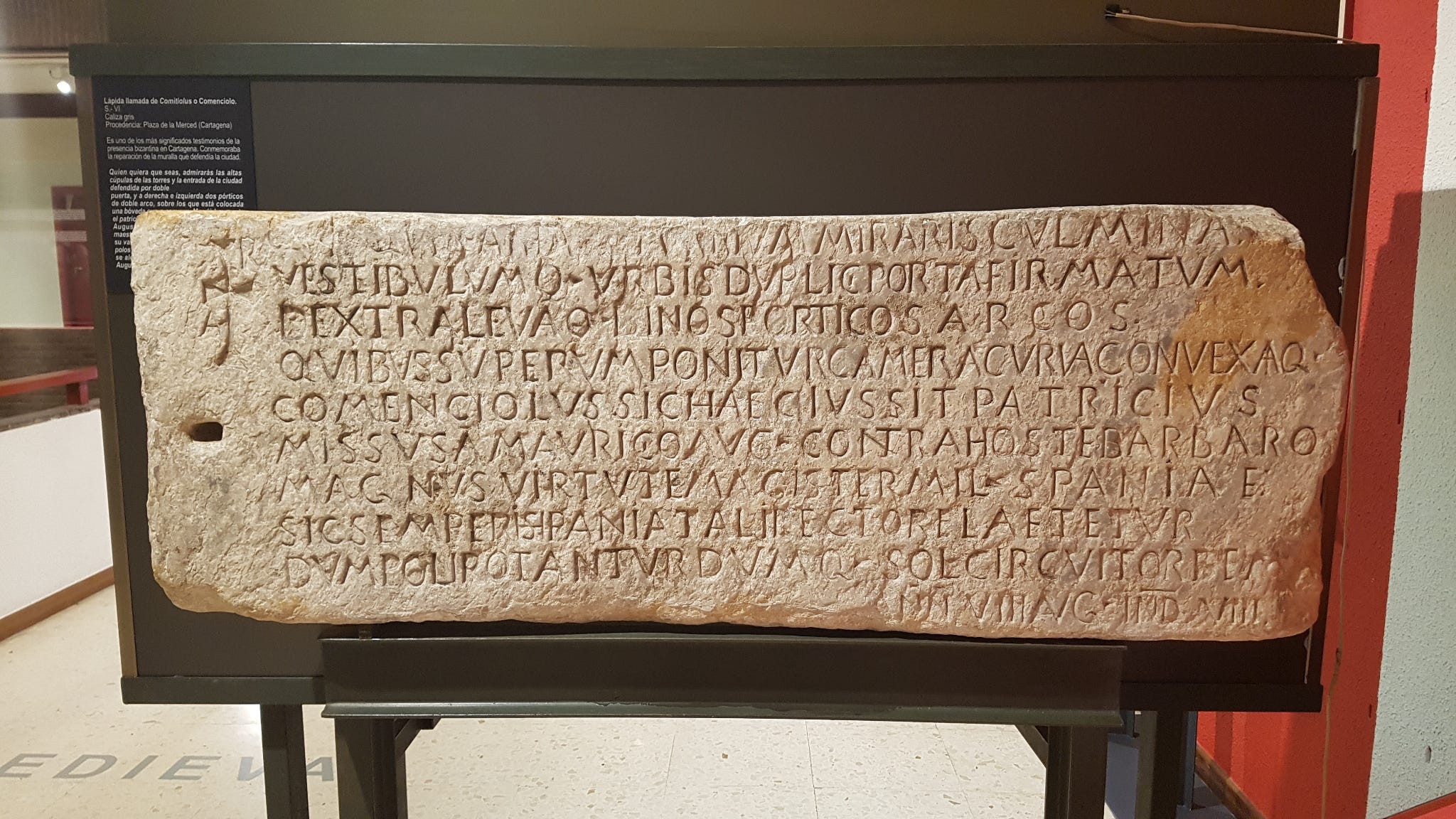
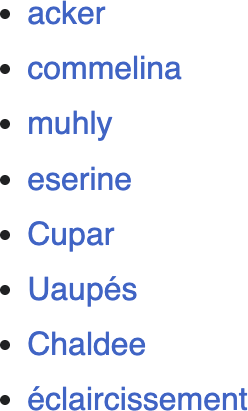
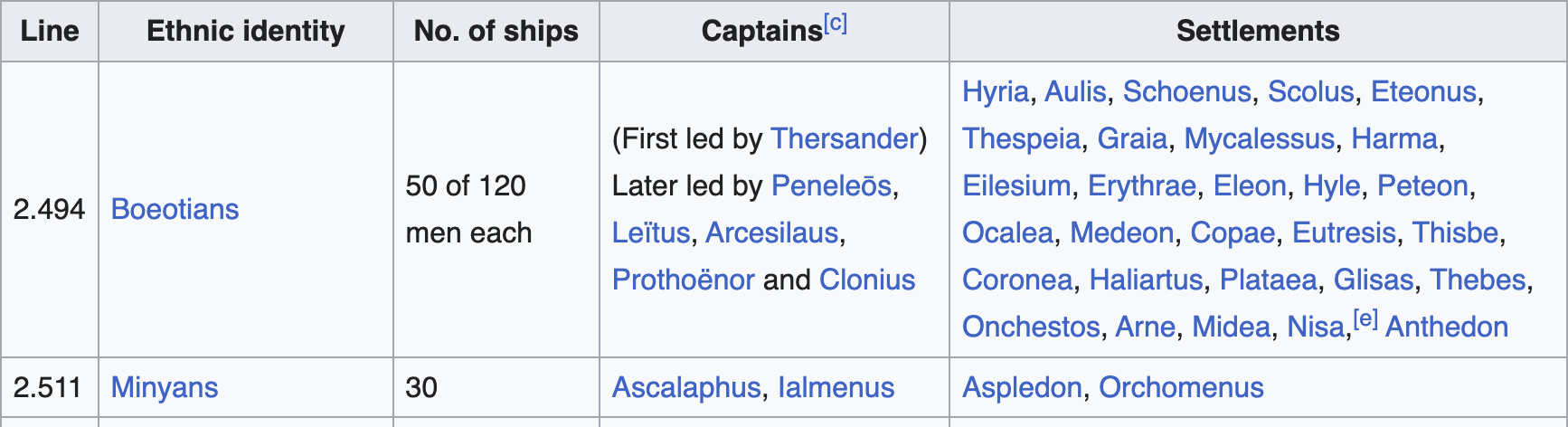
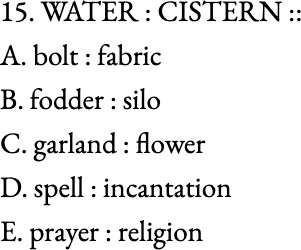


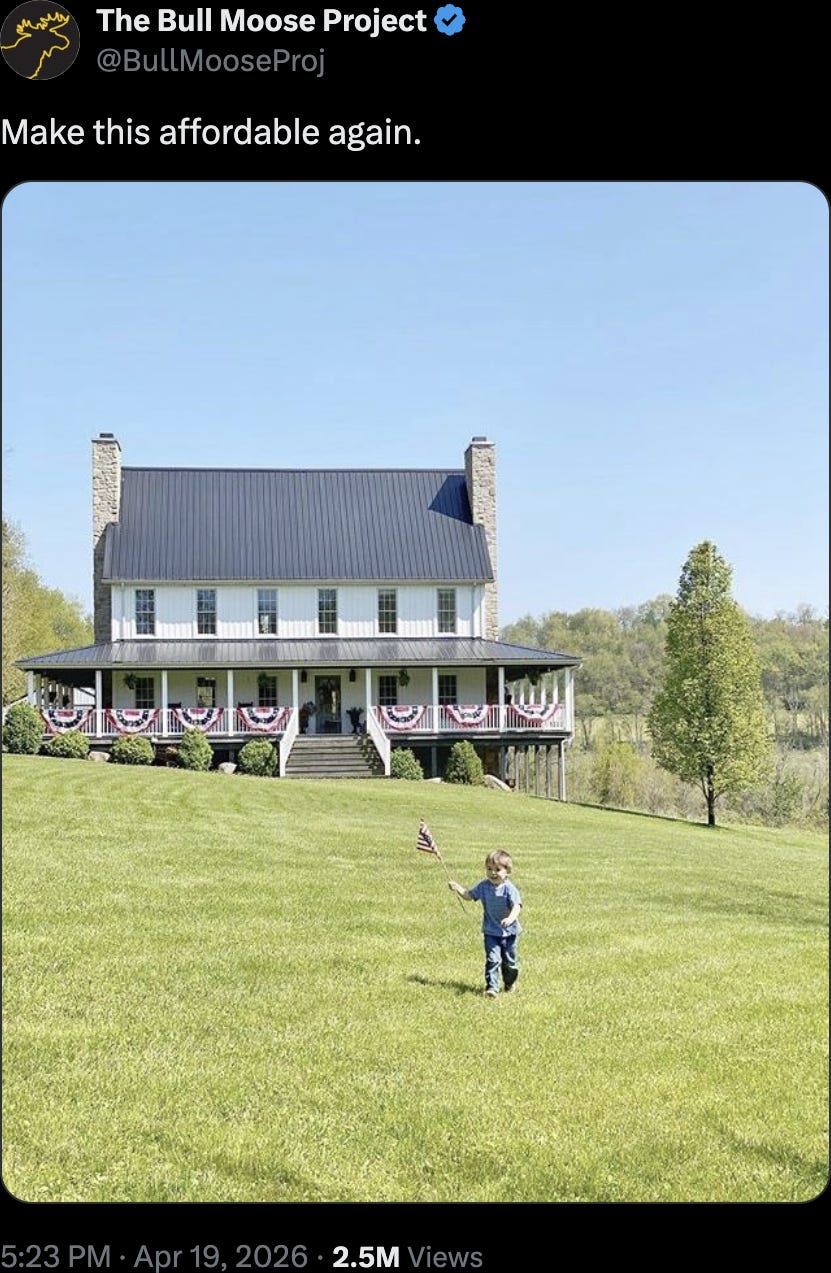
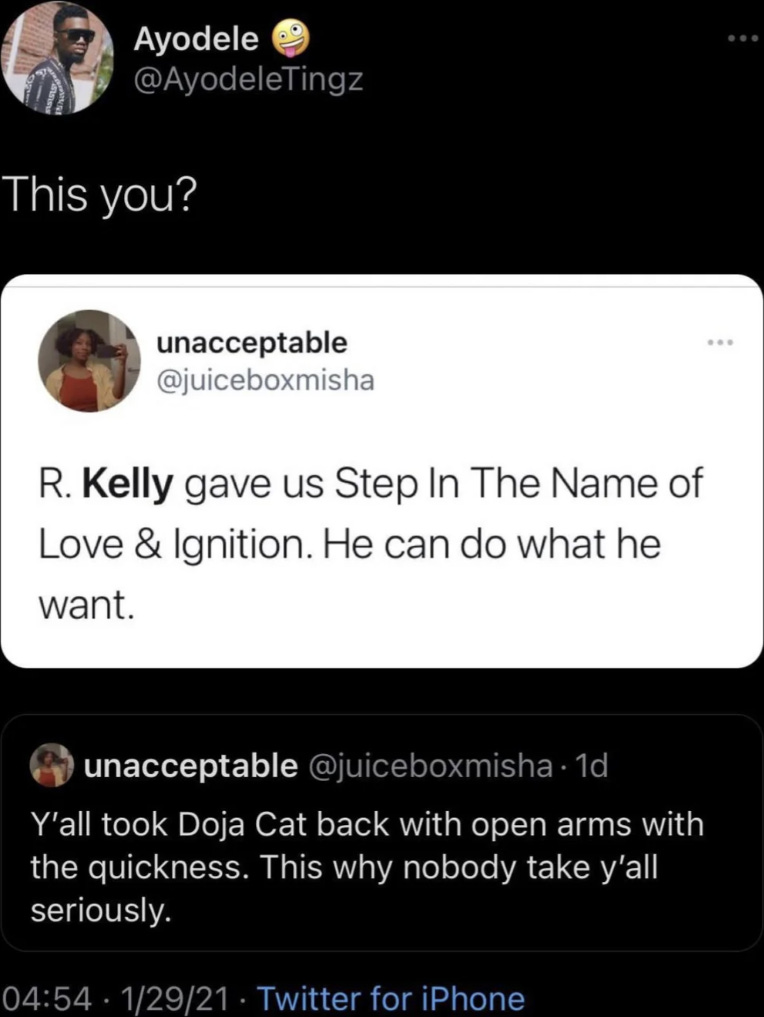
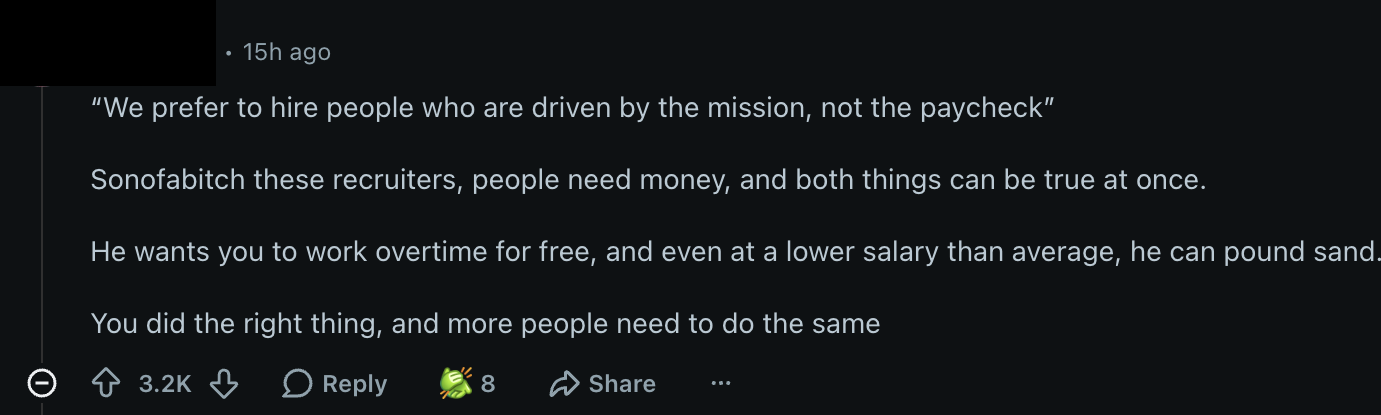


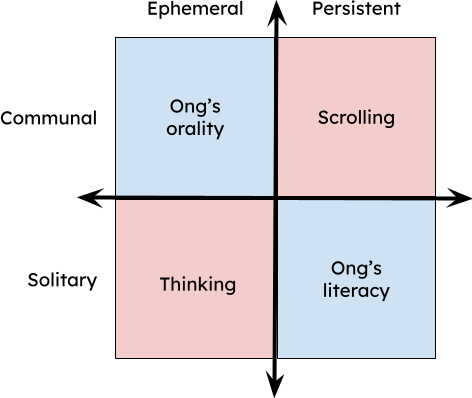


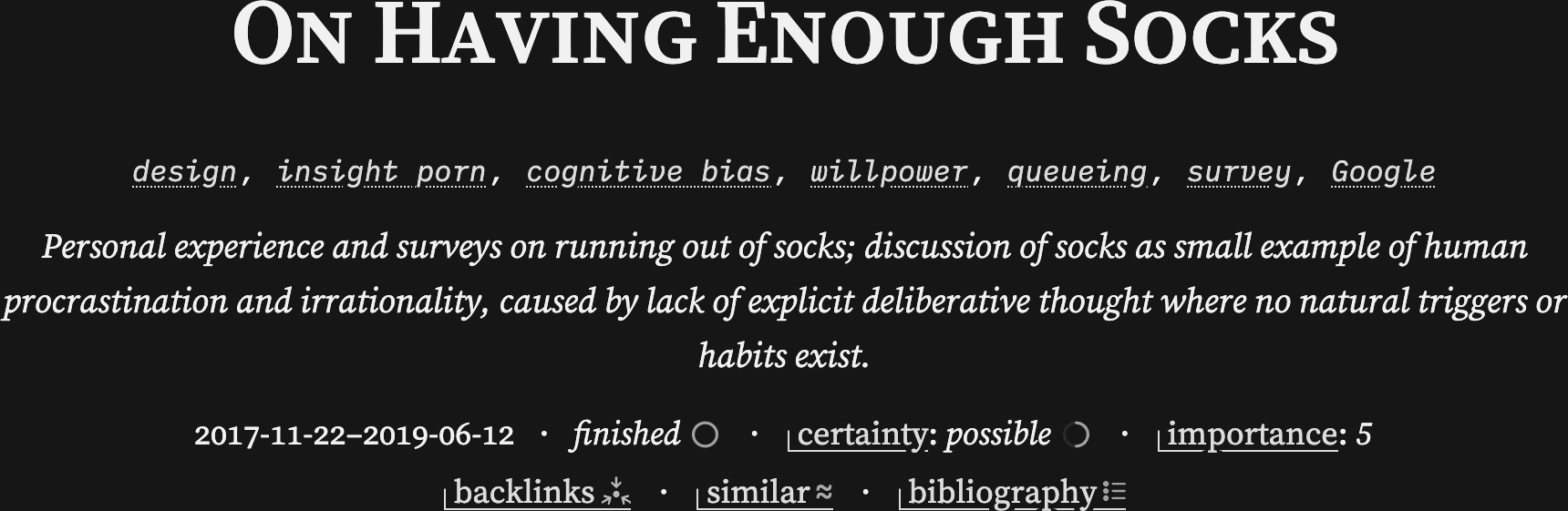
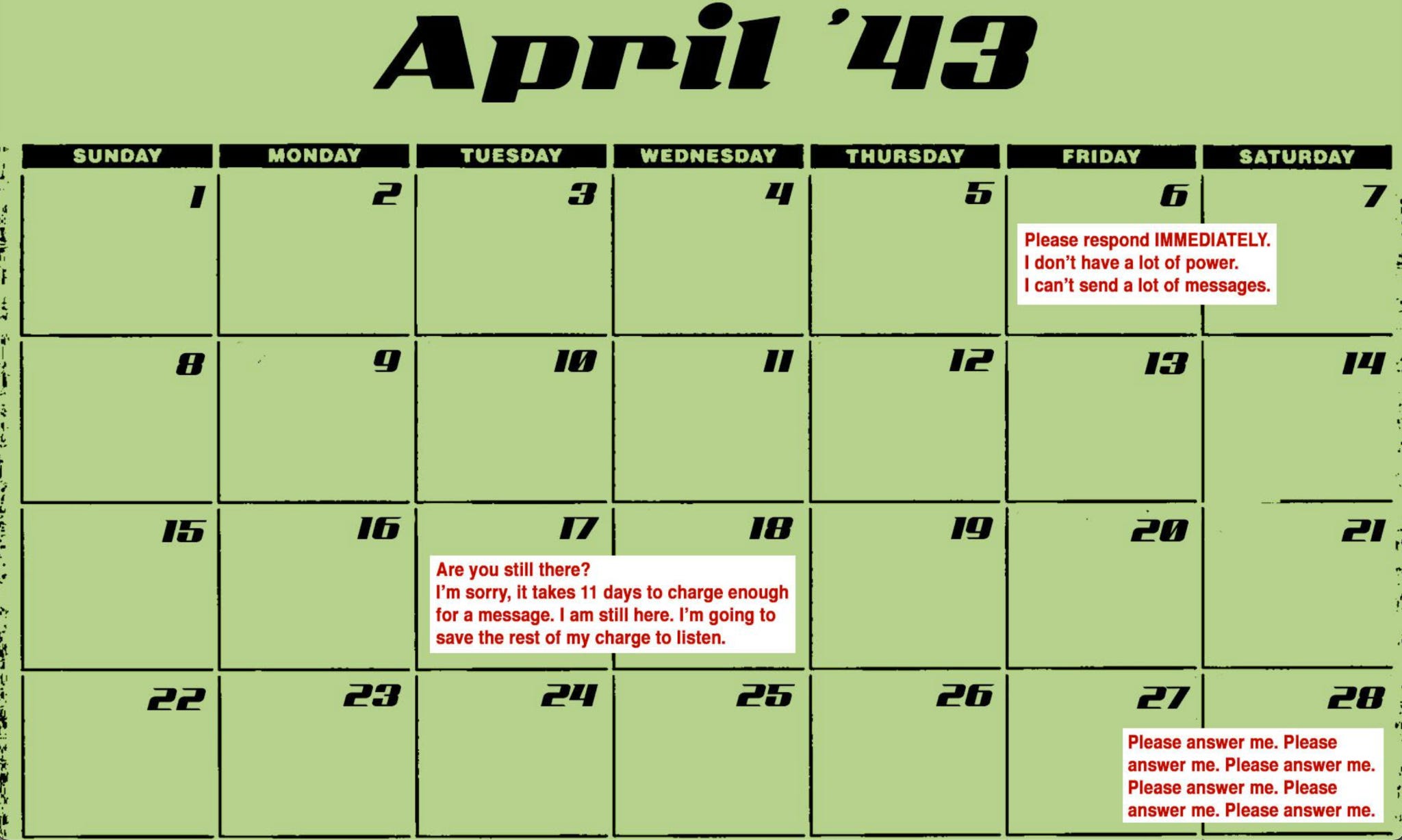
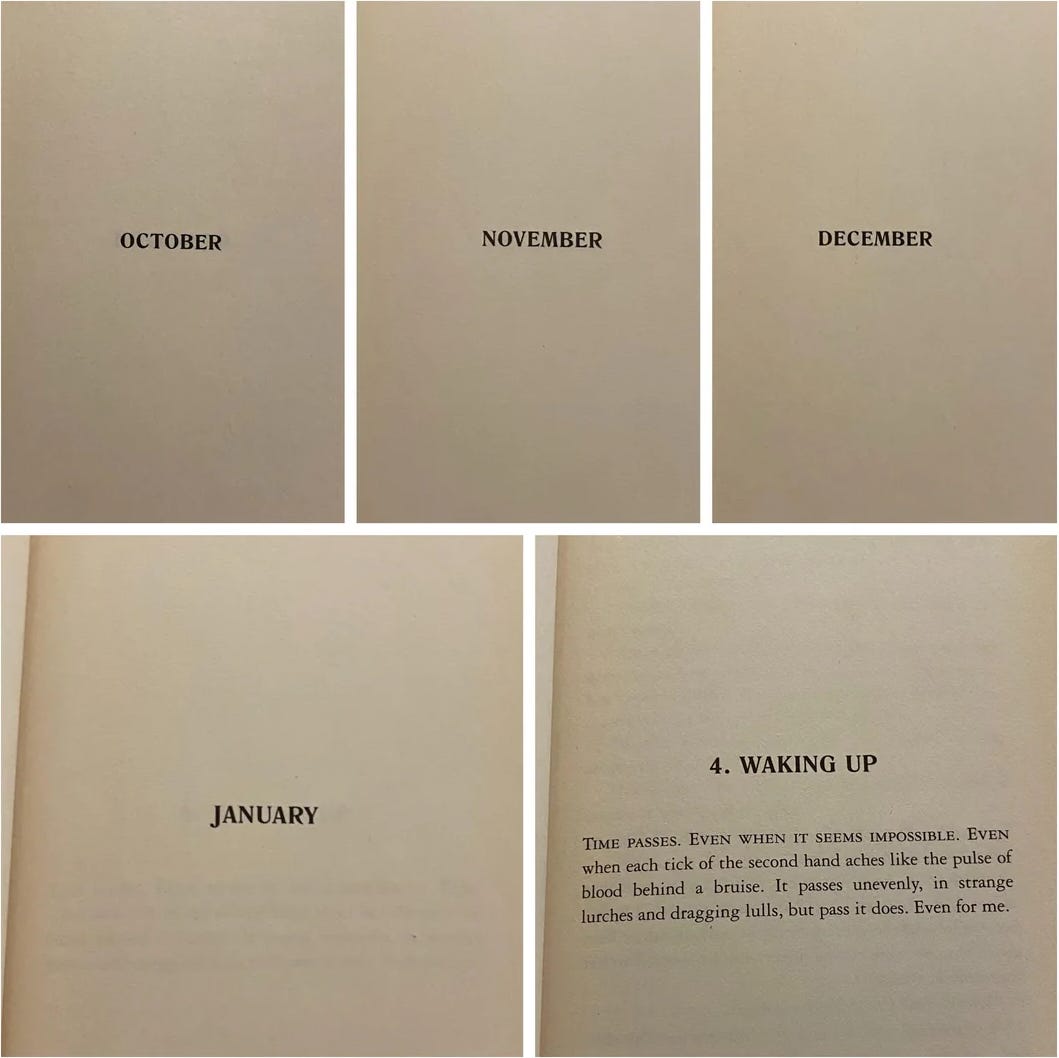
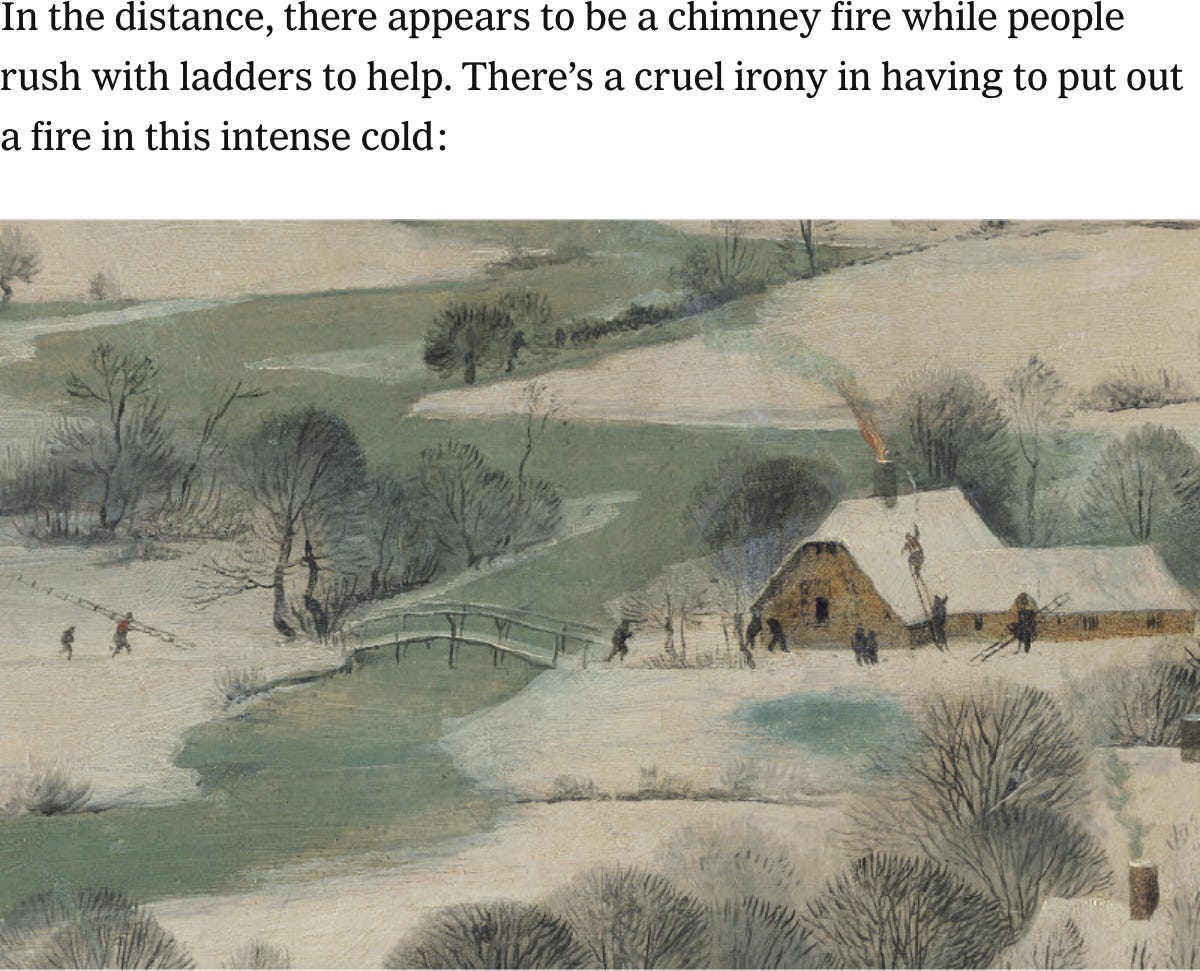


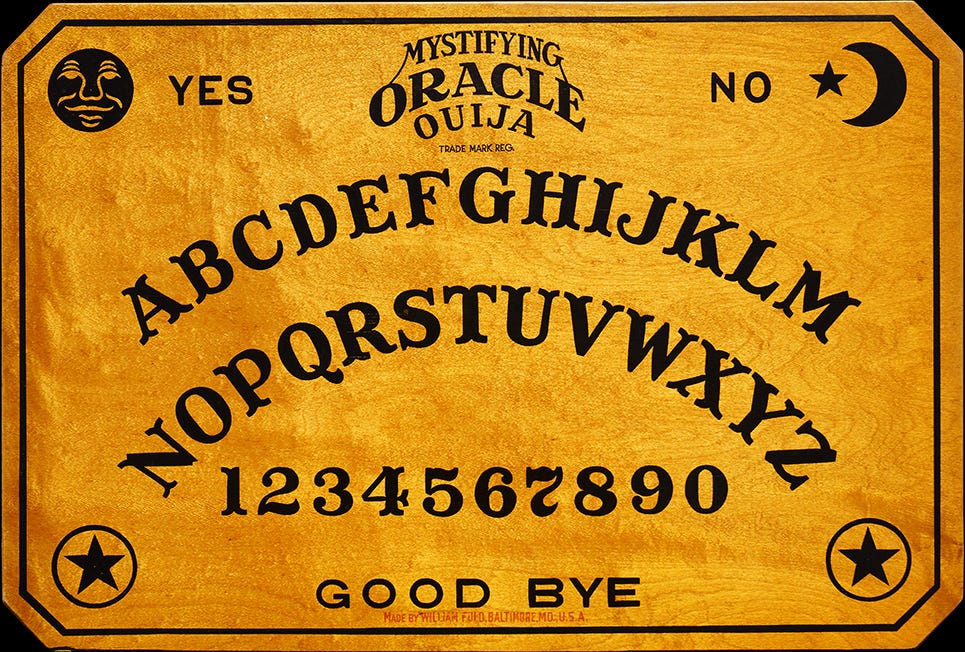
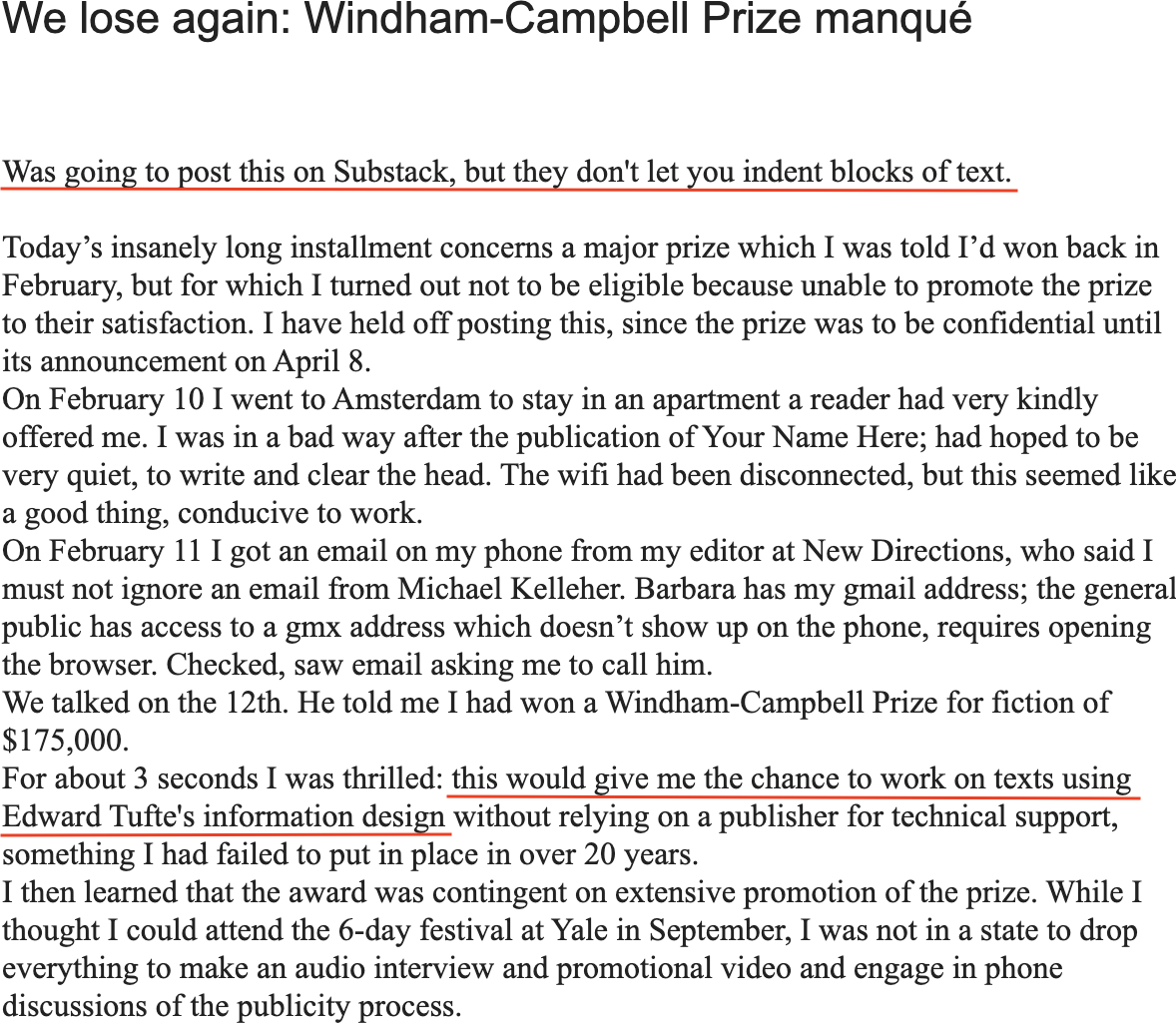
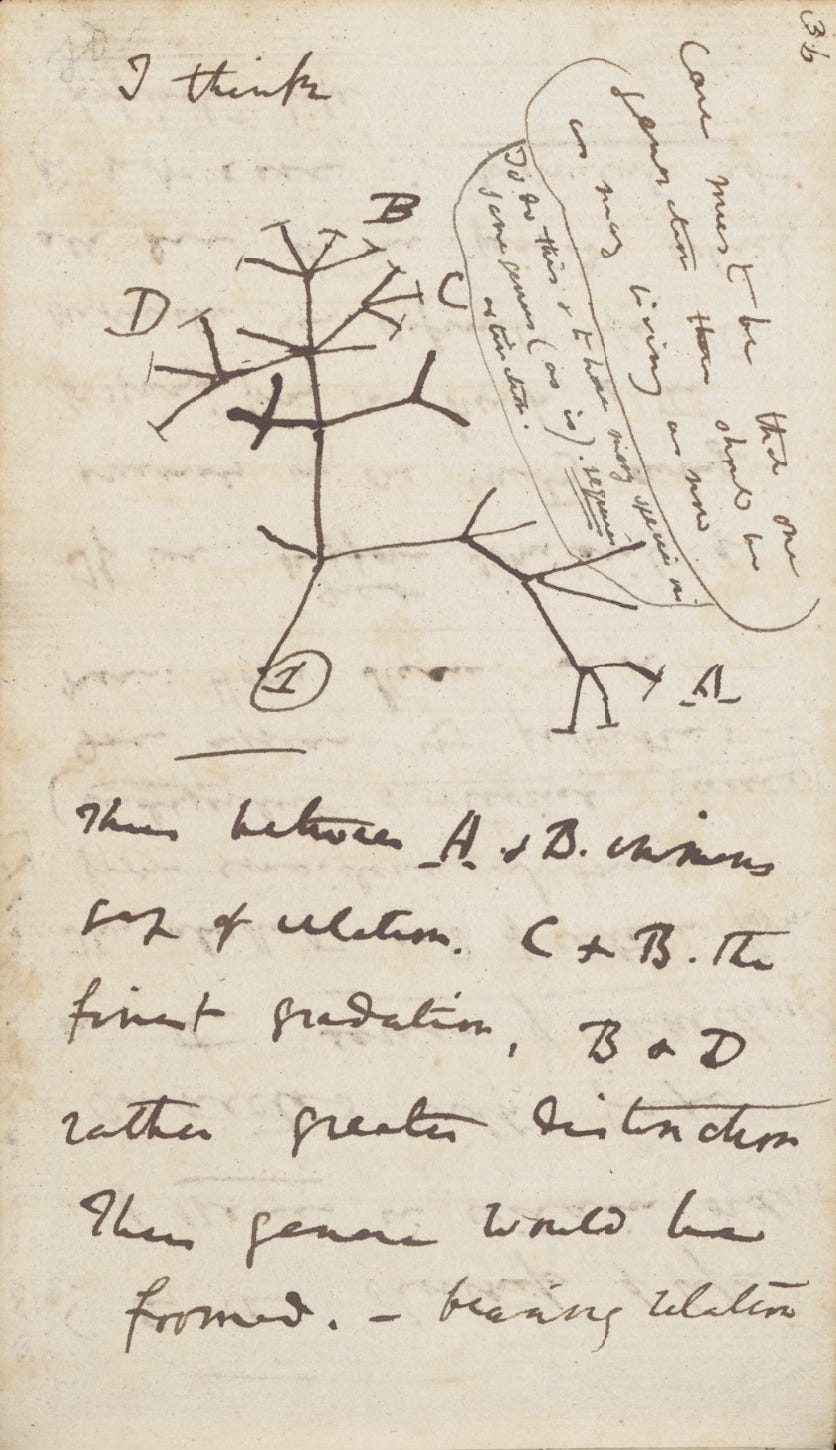
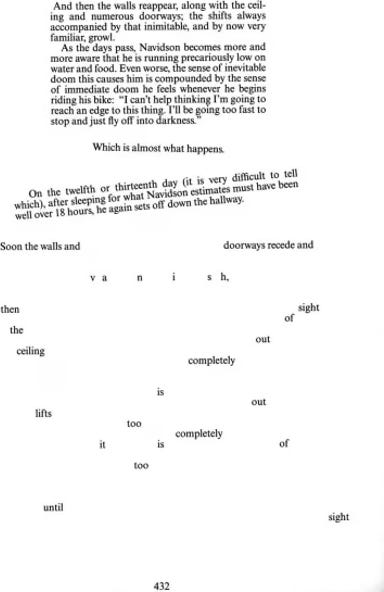


Some of the block-quote formatting seems off here. E.g. this is inside the quote: "The natural modern way to present this information would be as a list or a table, but an abstracted list of items undistinguished from each other is hard to memorize."
Thanks, I fixed that one, did you see others?
The paragraph "A begat B, B begat C, C begat D" seems to have the same issue, the text starting with "This is more abstract than Homer’s list" seems to be meant for outside the quote.
Also, the quote Timothy reported seems to have gotten worse instead of better, unfortunately. The image after the quote is now also in the quote, when what I believe was intended was that "The natural modern way to present" and after is outside the quote.
1. The code snippet ("main( ) {") is screwed up. To fix this, type three backticks (```) in a blank line in the editor, then press Enter; this creates a code block that you can put the code into.
2. In the line "it’s between the website and God whether those spaces show up \ \ wide or \ \ wide", the two pairs of backslashes each have only one space between them; I assume they're supposed to be different. To fix this, you need to use non-breaking spaces. I don't seem to be allowed to use non-breaking spaces in Substack *comments*, but they work in Substack *Notes* (I checked) so presumably they'll work in posts too. You can copy-paste the character from the first sentence here (it's in the shaded box): https://en.wikipedia.org/wiki/Non-breaking_space
I read the part about oral speakers connecting sentences with and, and, and. And immediately had a flashback to experience of teaching introductory college mathematics. This is how stereotypical bad students write; they don't believe that an operator is an entity in itself, just a connector to keep the flow of solution going, it's meaning is approximately "and now this happens". Example: 2x-5=3=2x=8=4
I could build a quick argument "naive mathematics is an oral tradition" based on this.
This example is interesting, because it seems to be incorrectly set up, while still solving for x correctly. (if we assume 2x - 5 = 3 -> 2x = 8 -> x = 4). So the student must presumably understand how to solve for x, while not understanding how to properly set up equations? Is this really common?
It is extremely common. 30% of the class would write like that (in 2003-2009). I compared my experiences against other teaching assistants / early career instructors.
Students would get angry at criticism. I got the right answer, didn't I?
If you give them a harder problem, where "connect everything with =" gets them hopelessly confused. They would get angry at the problem. Just like subjects of study in the post got angry at silly questions about color of bears.
I don't think they were getting angry, I think it's "the other place might as well not exist" levels of "I don't trust your syllogism."
All taro is purple. Jill has taro, and she is grinding it. What color is inside her molcajete?
This is the same syllogism (give or take the minor simplification), but it is more concrete.
I do math sort of like this if I have to use a keyboard. I guess more-so treating it like the calculator ='s button, eg 2 * 3 = 6 * 5 = 30 instead of 2 * 3 * 5 = 30, whereas your example seems different, since it really is being used just as a separator.
Huh. I guess someone learning a foreign language might do something similar, like mapping 而 onto "and" and then that interpretation being fossilized.
The other unpronouncable literacy than code is math. My personal blog and research notes can only really take place on platforms with LaTeX support. It almost feels like the author of this review is grasping for math notation in their quest to invent a new, non-oral writing.
i.e., I use Franklin.jl as my blog generator, and to use the example from the post, could easily blog $$ \overline{\text{best}} ^ {80\%} $$ .
Computer science is just applied math. Lisp began as a mathematical formalism that was then coded into a program later.
Substack does actually support LaTeX in posts (but not comments).
>The other unpronouncable literacy than code is math.
Very much agreed! I was rather relieved, when reading the post, to _finally_ see
>But it can’t make much use of the highest forms of literacy, the forms that are impossible to speak out loud: tables, _equations,_ code.
[emphasis added]
I'd emphasize the importance of being able to choose the _order_ in which one pays attention to the components of an equation or expression, unlike the fixed serial order in speech.
If I see a definite integral, I'll look at the most complicated part of it first - _usually_ the integrand, but it might be the upper or lower limits or the differential if those are more complex.
One other class of literary (in a broad sense) texts that bears mentioning is circuit schematics. Again, the ability to shift focus and revisit information is crucial.
This review confused me a lot. It's not clear at all which parts are the reviewer's own arguments, what's the content of the book, and most importantly, on how strong of a footing each of the claims is.
Right at the start we have a claim that for oral cultures, words are alive. Because the world isn't full of labels or something. I sort of catch a vibe here, but there's also a high chance it's nonsense.
The review goes on to talk about code as a form of writing. There's something there, but it doesn't translate cleanly at all. In particular, there's repeated confusion about code as an information encoding technology similar to writing, and the result of running such code on a computer, which are very different things.
The entire thing is full of this type of confusion. At the end, the "reviewer" then goes on a rant about how writing can be improved visually, which... I guess? But I can't bring myself to care.
Agreed. I would even go one step farther and say that the arguments about making text more interesting seem counter to the points about literacy that they described in the beginning. Expressing ideas like "yelling" through typography is exactly the kind of oral-first writing that they decry in the previous section of the review.
Yeah, was thinking the same - feels like the final form of those suggestions is just... memes
Agreed that the ending was confusing and contradictory. The reason why "text with extra visual elements" has remained relegated to gimmick fiction is because it is inconvenient and not very useful.
If the quality of this review is reflective of the quality of Ong's ideas, it saved me a lot of time wasted on reading Ong's ideas.
Yep.
I'm not going to blame Ong since I don't think the book was more than an excuse for the reviewer to exercise their hobby horses.
That is very fair.
> Substack, in particular, pisses me off because it forces authors to write in the most strict plaintext I’ve ever seen. IT DOESN’T EVEN ALLOW UNDERLINES!
My usual complaint is that it doesn't allow "a href" tags, so instead you just have to dump a URL, but that's a bit of an annoyance as well. You could write <u>text</u> to get across the intent to underline (whereas using that format for links would likely mangle the url people click on and misdirect them).
> As long as you have a strong vision, an LLM can guide you through the process of publishing a typographically complex essay on your own website.
I used to have a Tripod site, but I primarily used it to host text documents, and now that Tripod has expired I can't even do that.
> When Darwin first wrote down his theory of evolution, he didn’t do it in words. He did it like this:
That seems like an example of your solitary thinking quadrant, because when he actually published Origin of the Species he used words (and it was printed, rather than being in handwriting only he could read).
A lot of software is improving fast these days, such as Tesla's Full Self Driving (Supervised) code.
But then there's Substack ...
These show very strong signs of being deliberate product decisions; it's not a technical problem.
Do you think the single most obvious shortcoming in Substack -- that you can't paste a table of numbers (so you have to use a screenshot as a work-around) -- is a high level decision made by the Substack marketing department after researching the tastes of Substack subscribers: "Our customer hate data tables!"?
Could be ...
I was referring primarily to the decisions to (1) not allow arbitrary HTML, and (2) not allow any formatting at all in comments. Lack of table support is admittedly more baffling, especially since they support a lot of things way more niche than tables.
For my Substack, I charge $100 annually or $10 per month. I'd like to be able to offer a four-month $36 subscription (largely because Stripe charges so much for processing payments monthly), but ... No Can Do.
I wonder if this is just because Substack appears to be generally lazy about writing additional code? Or did Stripe negotiate with Substack a ban on subscription lengths longer than one month and shorter than twelve months to maintain their lucrative haul on monthly billing?
Note: on the whole, I very much like both Substack and Stripe. But I wish they were getting better faster.
Perhaps we could collect our wishes, and create a document for anyone who would like to enter the market and compete with Substack.
For example, I sometimes write about programming, so the text includes code samples. When writing code, 80 characters per line feels like a claustrophobic minimum, but in a Substack post you get about 50? I am not sure about the exact number, but it's often not enough to write things like "private MySpecialGadgetFactoryBuilder mySpecialGadgetFactoryBuilder = new MySpecialGadgetFactoryBuilder();". So I would need a paragraph style that is "code" not only in the sense of "monospace font", but also allows me to write 80 characters in a line.
Also, I can currently choose to mark some words as monospace, and I can choose to make some words be a hyperlink, but for some reason I can't have both. (And this was even possible in the previous version of Substack a few years ago, my older blog posts used it, but then they removed the functionality.) I would like to use monospace for the names of Java classes, and hyperlinks to point to the respective file in the GitLab repository, but I can't.
Would it be so hard to allow the author to center a line? This is just an esthetic preference, but I love separating parts of text with a centered "*" or "***" symbol.
The captions of images are difficult to work with, for some reason I cannot figure out. I do not remember the exact details, but copying the caption from one image to another is almost impossible. If I make a screenshot, put it in the post, and write a caption, and later I decide to replace it with a better screenshot, it is usually easiest to just type the caption again.
...and these are just things that I would classify as bugfixes or trivial enhancements. Then there is a separate category of nontrivial new features I would like to see, for example:
Authors or blog owners being able to appoint other users as moderators of their blog. A moderator can delete comments or block users, but their decisions can be reviewed and reverted by the blog owner. (ACX would need this like a salt; the comment sections are insanely large, and I think most of us would prefer Scott to prioritize writing new content over doing maintenance work.)
Support of multiple languages. Currently, the only thing you can do is start another blog in another language, using a different URL, and maybe add some manual cross-links. Some of us are multi-lingual, could we get some native support for that, please? For example, a page that exists in multiple languages could have the same url, perhaps ending with something like "?lang=en", and buttons on the top to switch between the available languages. (And maybe another button to create an AI-translated version.) All language versions could have a shared comment section, with comments automatically translated to the reader's language, giving the reader an option to specify which languages (yes, plural) should be viewed in original.
Arbitrary HTML from pseudonymous internet randoms with no skin in the game is never allowed, anywhere, because it's a great gaping security hole ready to abuse.
A small subset of HTML restricted to specific tags with specific attributes is still allowed some places that have either taken heed of the "parse, don't verify" dictum in their engine or have not yet been punished hard enough for failing to keep the tag set small and failing to use sufficiently robust mechanisms for parsing it. However, at that point, most actual users prefer a less scary approach to formatting, like markdown or a WYSIWYG text entry box with styling buttons, which is also much less risky; so these days no-one bothers.
I suspect the high-level decisions are more like this: "Our most profitable customers just want a system that allows them to spam their subscribers with political opinions, conspiracy theories, AI-generated essays on mindfulness, etc. Some features -- such as bold text, italic text, pictures, and embedded videos -- are nice to have, but our typical customer prefers to keep things simple. And then there are a few nerds who want things such as tables, but they generate like 0.1% of the profit, and most of them will end up using a screenshot of a table, and if you gave them tables they would probably start demanding something else anyway, such as interactive animations or scripting, but we are not in the business of making a website for nerds."
Plus I expect the typical corporation setup, where the IT developers are nerds, but their managers are not, and the managers just cannot imagine why data tables could be so important to someone, so they will assign it a priority much lower than e.g. changing the position of a "subscribe" button.
The appalling performance of the entire site on mobile browsers surely can't be deliberate.
If by "a href" you mean hyperlinks whose text is something other than the URL being linked to, Substack *authors* can do that just fine; there are a bunch in the above post. Substack *commenters* are restricted to plain text; I suspect this is because they're not trusted not to use the power of formatting obnoxiously.
(Neither authors nor commenters can use underlining; the reasons for this are rooted in an old philosophical debate about the semantic meaning of annotated text in the context of HTML.)
FYI there are lots of Tripod-like things still around; Neocities is pretty user-friendly.
Yes, I'm referring to commenting. I'm able to use links in other kinds of comment sections, but not Substack.
Thanks for the tip regarding Neocities.
Huh, which comment sections let you do this? In my experience it's a fairly small minority. The only ones I can think of off the top of my head are LessWrong and Scott Aaronson's blog.
All Wordpress blogs, such as my own or Greg Cochran's. Marginal Revolution is another notable one, as is Andrew Gelman's. Disqus no longer lets me copy/paste markup to get rendered that way (annoying), but I can use the toolbar to add links (though not if I stay on the Discussion page after clicking one of their email links, which can in turn link to the specific page but I don't always bother if it's the AV Club where the comment section won't load and bring you there by default).
Note that the philosophical debate here spills over to web page Accessibility desire/requirements and for commercial sites can get the Americans with Disabilities Act involved ...
The logic games portion of the LSAT got cancelled on the (at least ostensible) grounds that it's unfair to blind test takers. Does the ADA explain why Substack doesn't allow you to paste a data table?
Background: I spent a few months investigating the taxonomy of web site data and control flow organization as part of trying to understand for my own satisfaction why the web seems to be getting blander. But I don't work for Substack and I am not a professional web developer.
So ... Substack doesn't support tables because Substack thinks of itself as a providing subscription based mailing list support. Basically, the authors do the equivalent of writing an e-mail newsletter to their mailing list and Substack will handle the rest: blasting out the e-mails, posting a copy to the Substack web site, managing billing, etc.
Tables render poorly/inconsistently in e-mail.
Since Substack thinks it is helping send out e-mails, it intentionally provides no table support. Yahoo mail doesn't support tables on e-mail composition, either, so there is some reason to believe that this answer is correct-ish.
Substack provides lots of features that are a lot less supported in email than tables. And tables in HTML email do mostly work.
Your best bet for tables in a Substack post is using datawrapper, although you have to create a free account there to do it. They render fine.
If it's small enough, you can just screenshot out of excel or a book too, I've done that plenty of times.
As it turns out, when you give most people the power to do the kinds of formatting you're describing, most of it isn't Tufte. It's Geocities. Which is fine, but I can see how the platform evolution happened.
'For example, Hesiod, when writing about justice, could not write about it abstractly; '
Why is this being held up as an example of Orality if Hesiod is using the written word?
Scholars apparently differ on whether Hesiod himself wrote down his poems or if they existed in oral form and got written down later. Anyway, Ancient Greek culture did not switch from oral to written overnight. It took centuries. In Thucydides we still see a largely oral culture even at the higher social strata. Private libraries only started to appear in V BC.
The archaic Greek poets (the lyric poets,* the authors of the now-lost "Epic Cycle", perhaps Hesiod & the author(s) of the Homeric Hymns) composed poetry with a lot of the techniques used by oral poets, & following oral tradition in their form & subject matter, even though they were literate & therefore had more time to consider their words.
*We have almost no fully-oral lyric poetry or (AFAIK) direct references to it in ancient Greece, but comparative evidence suggests that it was a significant part of the Indo-European poetic tradition & was in some ways more conservative than Homeric epic.
Oral: What things I adjudicated not from messengers other than you or myself to hear. Written: I did not think it fit that I should hear of this from messengers. Changes: The written version adds abstract concepts of ‘it’ and ‘this’. The verb becomes ‘thinking’ not ‘hearing’.
In fact both quotes contain 'hear', the analogous verb to 'think' in the second quote is 'adjudicate' in the first. And are 'it' and 'this' really abstract concepts? I don't think these analyses are very coherent.
This one rang a bell. Sam Kriss’ “Reading Is Magic”?
That piece explicitly cites Ong and is based on his ideas.
Don’t forget Luria
I've always sympathized with the peasants interviewed by Professor Luria in the 1930s: I suspect some of them reasoned: "Here's some apparatchik sent thousands of kilometers by Stalin to interrogate us with some damn fool questions about bears. I don't know what the Party Line in Moscow is at the moment about the color of bears, so I'll play dumb. They won't shoot you for being dumb, right?"
It would be interesting to study literacy vs. orality in evidence used to condemn Communist Party members in the Moscow show trials of 1937.
If they had you in writing expressing something good about Trotsky or any of the umpteen other forbidden things, I presume they could just show you wrote it and then shoot you.
But if they didn't have written proof of unorthodoxy, well, they had to beat you into confessing you had said it, which took time and trouble. Of course, they enjoyed beating people before shooting them, so maybe I'm exaggerating the distinction. But still, I figure, the likelihood of getting executed by the secret police in 1937 correlated positively with how many political opinions you had put into writing.
Similarly, the permanence of social media contributed to Cancel Culture during the Great Awokening. If director James Gunn had just made a few pedophilia jokes to friends orally, or if he'd written them in private letters to friends, it all would have blown over. But because he put it in universally available digital writing, he was in big trouble for awhile.
I've heard arguments along those lines before. I'm willing to credit them so long as other people are willing to grant that there's an important difference between not being *interested* in using the skill being tested here and not being *able* to. Unfortunately concerningly many people want to use this as a stalking horse for epistemic relativism.
Right. I don't know what the universal implications are, just that it's pretty funny that everybody naively assumes that Dr. Luria's findings in Stalin's Soviet Union in the 1930s are universally applicable. After all, why would anybody play dumb in Stalin's paranoid dystopia?
Similarly, I can sympathize with Dr. Luria, just when things are getting tense in Moscow, vanishing to Central Asia to ask peasants about the color of bears, and then publishing his findings decades after Stalin's death: talk about maintaining a low profile!
The use of demonic possession as an explanatory method for explaining wrongdoing is a far better argument for epistemic relativism.
Or we could discuss the Hezbollah pager incident, that's another one good for showing "those who cannot think two steps into the future."
Yeah, I've taken that view myself. "Hang on, what if white polar bears is some kind of coded question about the Whites? Yeah, that was a while back, but if this guy is trying to sniff out regressive attitudes and covert sympathies for the Tsarists in order to get us all shot, I'm going to pretend I have no idea what even a bear is".
Right. Using the W-word "White" in 1930s Soviet Union could mean you are a Wrecker.
I think that in Stalin's Russia, it wasn't a question of "Am I paranoid?" but rather "Am I paranoid enough?"
"They won't shoot you for being dumb, right?" sounds somewhat reasonable, but don't count on it to save your skin. Many hundreds of thousands died in Stalin's purges because they once said a kind word to somebody Stalin disliked, because grandad was the wrong kind of peasant, because they complained about the fact that local shoe store's latest shipment consisted of left boots only, or that old favourite, "looking disgruntled in the face of authority".
Indeed.
If you try to do abstract logical arguments, but you aren't trained in knowing which moves are valid logic, you will soon end up with all sorts of nonsense.
These people probably don't need to use abstract logic a lot in their daily lives.
So a general policy of not engaging with elaborate logical arguments will serve these people well.
> I don't know what the Party Line in Moscow is at the moment about the color of bears, so I'll play dumb.
If that were the case, then literate peasants would have played dumb just as much as illiterate ones, possibly more. But according to Luria, they did not.
Agreed! I'd remembered reading a comment along these lines before. I'm guessing that you made the same good point in a previous comment section at some point?
There's a statue or carving of Hammurabi in the U.S. Supreme Court building celebrating him for being the earliest known implementer of written law. The implication is that written law is more just and fair than oral law.
But, I suspect that Hammurabi found written law to be helpful in his being more authoritarian. He didn't have to get into arguments with anybody about what exactly the law is and whose memory is right. Like the busdriver in the Simpsons meme, Hammurabi could just tap the sign.
I recall visiting the Department of Motor Vehicles once and asking a DMV lady if I could do X. She didn't say anything, she just tapped a written sign pinned up in her cube that said: "No, you canNOT do X."
And that was that.
On the other hand, as a matter of revealed preference (Twelve Tables) Roman plebeians found written law to be helpful in getting out from under patricians' thumb, who had been treating law as personal religious property. So it cuts both ways sometimes!
Written law is a key advancement in the concept of equality under the law, as that requires people to agree on what the law is
> We could instead have ended up in a place where every text looked a little like House of Leaves. Maybe we still can.
That sounds horrific and dreadful. Last thing I'd want.
This is why emoticons are low key vital to modern digital casual communications
“No one feels a deep internal drive to read long texts. It takes a lot of effort for us to start reading.“ That’s just false. I’ve read many long books that I was eager to read just because I knew I would really enjoy them, and longer meant more enjoyment.
Oh yes, I gladly dive into A Song of Ice and Fire or Lord of the Rings every time it's been long enough that I can reread them. The longer the story the more room the author has to work in.
You mean the more faaat an author has to roll in. Short stories are often the best for rating authors because they're the hardest to write.
Most people reading books want to pick the books which produce the best reading experience for them, not the best means of grading authors on technical skill.
I'd rate authors based on ideas, the heart and soul of science fiction, not based on technical skill. And that's better done in short stories. Niven's are crystallic.
I mean the longer I'll be delighting in the experience of a secondary world, which is what I read books for. I don't care about how hard or easy it was to write, I care about the spread of the epic and how good a job the author did making it feel real.
Suggesting Kulthea, if you're looking for a world to play in. : - )
Even if you love reading as an adult, learning to read takes a lot of effort. Babies are born with specialized neurological systems for learning language and a drive to start doing so early in childhood, but reading typically needs to be explicitly taught. Groups of deaf children exposed to a collection of signs have rapidly invented fully grammatical languages, while new written languages without outside influence can take hundreds of years to develop.
The problem with the text visualizations you gave is that you can't take them with you. You can read them, but you can't copypaste them, you can't quote them, meaning you can't talk about them.
Maybe we need Unicode Vector. A standardized, universal format for embedding graphical context in text, optimally combined with placement hints for adjacent words.
The technical problem is mainly an interop/fragmentation thing, I think—which you kind of said, but I don't think “new format” would be the best result, because we already have SVG that can be embedded in HTML, and it seems likely that you'd base it on that. The earlier Windows and Macintosh universes had OLE and whatever-it-was-on-Mac-that-I-don't-remember-the-name-of that would allow relatively seamless rich clipboard operations compared to what we have now, but it's harder to establish this on a diverse Internet.
On the flip side, in a way that I find an interesting juxtaposition between visuality and a sort of maybe-neo-orality (I don't think it quite matches up but it seems to be part of the same cultural flow?), people in many corners of the Internet do regularly quote graphs. Because they take screenshots. Of everything. Including normal text. Because that always preserves the thing they see with all of its layout and formatting, and nothing else always preserves it. (And then, I presume, the visually impaired users who might've wanted to be part of the conversation either pull out increasingly advanced OCR tools or cry.)
You also can't necessarily render them well in an RSS reader. And if you colorize text, it's going to get discarded or warped when the reader wants dark mode and you haven't implemented it. Firefox Reader View will just discard it. Some sites just invert things: I was rereading the Sequences a while back and noticed text about "the redness of red" being rendered in cyan, which was tremendously amusing. Some sites try to only invert luminance and not hue, but this still has issues.
Numerous distracting formatting errors were already flagged and (being attempted to be) fixed - a mark against written culture. Do wish this review didn't repeat the previous-years habit of not clearly stating the title of the reviewee + the full name of the author early on. I can autocomplete to [Walter] Ong because it's a fairly distinctive name and I have vague memories of him being associated with Marshall McLuhan or Crunk & White, but it's annoying to have to tab out and double-check this for myself. Inclusion of, let's call it various mixed media was creative, I did not have "Gwern reference" on my ACX Book Review Bingo card. Overall I think it made for a decent *essay* on the topic of orality and literacy, but the nominal book being reviewed was a third wheel at best. Just one citation among many. This I unfortunately cannot condone in the ACX Book Review Contest, even if I'd have given a "like" to this post as a normal post otherwise. (And, no, I do not want every text to look like HoL, I'd rather give up reading...)
ETA: on further consideration I really don't like the conclusion of this one, where the premises simply don't seem supported by the evidence thus far offered. It's the equivalent of suggesting solitary-persistent written culture do a "Pivot To Video", try to compete with the infinite scrolls of the world by apeing that inane mode of passive nonthought, just done with textual gimmicks instead. And, hey, I am a fan of format screws, there are some very cool storytelling possibilities you can unlock even using entirely plaintext! A fun and simple example of "convey through words two different simultaneous conversations happening in realtime", knowledge of plot not needed to appreciate the twist: https://scp-wiki.wikidot.com/counterpoint . Or Zero HP Lovecraft's "Don't Make Me Think", which he sadly deleted, but that was a masterpiece where at least half the meaning in the story was conveyed through hundreds (thousands?) of emoji - but they still need the scaffolding of written words to make sense. I can appreciate that despite agreeing with Ian Bogost that emoji are a degenerate form of smiley, a preliterate corruption turning the clock back on reasoning through abstraction instead of literal representations.
But, no, don't try to out-bullshit a bullshitter. We don't need to destroy literacy to save it. That's like choosing to incept the strong form of Fat Acceptance instead of developing GLP-1 agonists. And I think it's also undersold just how radical a change "put down the phone and touch grass" is, that already cuts The Enemy pretty effectively. After that, all you need is scale...I'm encouraged at the increasing Overton acceptance and prevalence of phone-free schooling, for example. Today's kids might not be alright, but tomorrow's may be.
The formatting errors are almost certainly a consequence of Scott's convoluted system for letting people submit reviews and then importing them into Substack (because this isn't a use case Substack is really designed for). It'll likely be better next year, since the shiny new web app for letting people rate reviews can easily be extended to handle submissions.
Oh, are we getting a New And Improved ACX Contest experience for next year? That's nice, I don't necessarily want to read something with a ton of bells and whistles (this is a blog by and for plaintext lovers), but it's a fair point made about e.g. tables. And having to constantly toggle my contrast controls on and off because some of the formatting (png transparencies?) won't load otherwise, that's a Trivial Inconvenience that does semi-consciously get me annoyed at a review for no real reason.
The new app was released this year, at the beginning of preliminary voting. My hope is that having it also handle submissions will make formatting errors less likely (because it can be specifically tested against Substack and then authors will have the chance to check that their reviews look right). You can also use it to read the finalist reviews if you like, since they remain available there after voting closes. That said, Scott is presumably still going to want to post the finalists on Substack, so tables still aren't going to work if Substack doesn't add support for them.
Wouldn't we expect Chinese speakers to be better at abstract thinking if this were the case? That effect seems negligible, as opposed to the benefits of being able to store information. It's also interesting to note that the rise of pinyin, especially for computer input, is a way that Chinese is becoming more "oral".
I once had a too-smart-to-know-she's-ignorant white college student try to explain to me that people from my own (Chinese) culture think about time different, because we don't have peoper words for it, she read it from Noam Chomsky so of course it's factually true. Maybe there was an abstract truth there I simply failed to grasp, but it seemed just concretely false and I found the whole interaction baffling.
(But then I'm a 3rd-gen twinky who didn't really learn the language. But then, none of the generations before me in my family who did, they never showed a weird understanding of time either. On other topics like gender, yeah, but I think that has a lot more to do with general conservatism rather than features of the Chinese language...)
I can tell you one thing: native Chinese speakers learn arithmetic more easily. Why? Because the way numbers are written in Chinese much more closely matches the base 10 Arabic numeral system we all use for modern arithmetic. Compare with a language like French where 99 is pronounced “quatre-vingt-dix-neuf” or (translated to English) “four twentys, ten, (and) nine.”
In Chinese, 99 is “jiu-shi-jiu” or “nine tens (and) nine.” This pattern is consistent, so that you don’t have oddities like the English “eleven” and “twelve”, you just have “shi-yi” (ten-one) and “shi-er” (ten-two).
It took me a long time to figure out that English speakers often prefer constructions like "fifteen hundred" for 1500, instead of "one thousand five hundred", and now you've got me thinking it's maybe due to this sort of parallelism. I do have an appreciation for the Chinese manju being written with X number of brushstrokes, at least up to 7 iirc, it makes playing that suit in mahjong much easier. By contrast our Arabic 0-9 numerals seem entirely arbitrary!
I did take French in highschool and found the numbers of the counting to be strange and semi-arbitrary. A lot like doing Roman numerals, actually. Probably part of why they don't usually cover anything more complicated than 1-1000, and maybe decimals to the hundredth for prices.
Same with Russian. Russian words for 11, 12 and 13 are, odinnadtzat' (one-on-ten), dvenadtzat' (two-on-ten) and trinadtzat' (three-on-ten), and the pattern continues. Similarly 20, 30, 50, etc. are two-tens, three-ten, five-tens, etc. Although Russian word for 40 is an extremely weird exception, not at all related to any other Russian numeric words.
Has a causal effect of native language on math ability been demonstrated? I've seen this claim made often, but never seen evidence of it. Studies I can easily find are small and not convincing: https://pmc.ncbi.nlm.nih.gov/articles/PMC4341514/
Irrelevant personal anecdote: I was raised bilingual and still mentally consult the times table in Chinese.
There is a weird fetishization of foreign language speakers in American culture. I speak a few languages fluently all my life (which is actually normal in the part of the world where I live), and I am still waiting for the promised superpowers to manifest.
Yeah, Slovaks have many words for cheese. So what?
Having looked it up, the argument seems to be that because Chinese lacks grammatical verb tenses this represents a fundamentally different approach to the concept of time than in Western thought.
Unfortunately the papers on it are written by modern philosophers so parsing actual meaning out is iffy.
Whoever claimed you can't listen to code has clearly never heard
"HelloWorld.java (fix/metal-true)" by NanowaR of Steel!
Halfway between that and non-code, we have the obligatory Mili, complete with illustrative video: https://www.youtube.com/watch?v=ESx_hy1n7HA
This review is terrible. I'm not even sure it's about a book, since we get a fleeting mention of one and then the review charges off in all directions.
And it's not even *entertaining* digressions.
Fun read. It is perhaps relevant here that no written language exists that does not correspond with either spoken language or sign language (according, I think, to the book Empires of the Word, which takes pains to dispel the idea that Chinese or Egyptian hieroglyphics expressed ideas rather than sounds). Code is perhaps an exception, but it is not used for expressing thoughts and ideas between humans. It is, in the sense of interpersonal communication, a written language by analogy only. (Let me know if there are exceptions: I know some jokes have been written in code).
The takeaway from this is that we should be sceptical about the potential for a visual language that is disconnected from the pre-wired centres of communication in our brain, which evolved specifically for tools that enable near instantaneous outwards communication, ie the mouth or hands.
I do think it could be possible to develop visual communication eventually, given the plasticity of our brains, and our ability to attach new peripherals to existing systems (see the book Livewired), but we would need an interface as quick as our speech and hands to make this work, I suspect. This may only become possible once we have computer interfaces, like neurolink, in our brains.
> t is perhaps relevant here that no written language exists that does not correspond with either spoken language or sign language
At least at some abstract level that's true, but there are instances of communities of writing where nobody speaks the written language much. The most extreme example was Heian Japan, where the men wrote literature in Chinese but nobody spoke it. (The women wrote literature in Japanese, so it was much better and has survived!) Similarly, Sumerian survived as an administrative language long after it was replaced by Akkadian, and Akkadian survived as an administrative language long after it was replaced by Aramaic.
Ditto Latin in the 14th century France and Spain. But as with Latin it appears men in Heian Japan used Chinese as a complex way of expressing Japanese words. (I had to look this up: I didn’t know this about Japan). They would know the Japanese word certain symbols were used to reference, or would use the name of certain characters to spell out Japanese words using the rebus principle. They would also use numbered subscripts to help reorder words to Japanese grammar. They were not reading text and understanding it in some purely abstract way as ideas - they were sounding out words in their heads, as MRI and EEG studies show we all do when we read.
Keith (C++'s mascot) disagrees with you. Languages do exist even if they aren't written, and some of them do not correspond to either spoken or sign language (ask an artist how they encode the world around them? how they dream?)
Our eyes are capable of encoding many times more detailed information than language is capable of expressing. Paintings are not language in the literal sense, however, and dreams certainly are not. I know a word like language can be used to mean many things, but I and i believe the author are using it to refer to the thing that a book is doing when it is conveying declarative information and ideas to a reader. Yes, pictures can in some ways convey much more information, but in other important ways much less: compare the complexity of ideas that artists could convey before written language was invented compared to what we can convey in books. It’s really a very different kind of tool.
It’s interesting to reflect on why written language is so much more powerful in conveying ideas than pictures are. I know of one children’s book that is only pictures with no words, but it is only about 20 pages long. No one has written the equivalent of Harry Potter as just a series of pictures, and when I’m arguing is that the history of written language suggests, we should be sceptical that adding visuals to words will greatly increase the kind and quality of information that can be conveyed. A diagram or illustration here or there can do wonders, but we already do that.
Language is symbols. I've seen paintings that are ... worldincoherent. An outside wall put in an indoor place. This indicates that the painter's internal model ...makes that possible. It seem odd to someone with a fuller visual model.
One can express language as pictures. Chinese and Japanese and Korean do this, albeit their current pictures are highly stylized and complex.
People have directed the equivalent of Harry Potter as just a series of pictures, although the screams do actually add something (watch "The Tribe" and see...).
Comics show that the "inbetweens" of pictures can be interpolated, we don't actually need to see them.
It’s important to be precise about the differences between visual communication in general and written language specifically. Yes we can express internal world models with paintings, but there are many things language can do that paintings cannot. Just try painting “I think therefore I am,” and see if someone will get the point. The author I cited above (Empires of the Word) points out that no language has ever been deciphered without first knowing what the language sounds like. Chinese, Japanese, and certainly Korean (which is an alphabet) do not express abstract ideas. (edit: sorry, you obviously mean korean before the language reform). They express sounds, and often express their meaning via the rebus principle (like “I can see you” with can spelled as a can), which relies on knowing the sound. Chinese is interesting case because different dialects can read the same words while producing different mental sounds. I don’t know how the author would handle this criticism. I suspect it has something to do with how written languages can tolerate quite a bit of diversion from the original sounds (as in English), but you have to make up the gap with considerable education.
> Code is perhaps an exception, but it is not used for expressing thoughts and ideas between humans
The latter is false. Code is used to express ideas all the time. This phenomenon is everywhere in STEM higher education, once students have been expected to have completed their first introduction to coding class. Coding is just an offshoot of mathematics, the older form of “written language without a spoken analogue” used to convey ideas.
Hm, it would be interesting to check what I happening in people’s audio cortex when they read code. Studies have shown that for written language, people do sound the words out in their head when read (based both on MRI/ EEG evidence, but also people take longer to read words that take longer to say). I wonder if people are sounding out code as they read it? Or if something totally different going on?
Ok I looked it up and the answer is it’s actually very different: Broka’s area hardly lights up. I’ll have to process this and adjust my mental model. I’m not sure if this changes the argument about written languages used as written languages - perhaps it’s a different category of thought and expression - but perhaps those categories could be combined in a useful way? I’ll need to reflect
Can you cite some japanese or chinese sources on this? Or a source where the "takes longer to say" still has the same number of letters?
For the "takes longer to say," check: https://link.springer.com/article/10.3758/BF03205520
I was relying on a book on the wars over how writing is taught, but the phenomenon appears to be well documented. (Non-scientific language teachers liked to encourage readers not to sound out in their head because they thought it was counterproductive, when actually the opposite turns out to be true).
For the first question, I'm assuming you're referring to the other comment about Japanese writers writing with Chinese characters. I was relying on AI because as I said I'm not familiar with that topic. There appear to be a variety of good sources online that detail how the system worked.
It was a reference to "ease of understanding" based on character complexity, versus "ease of pronunciation", but the source you're citing is well good enough, thanks bunches!
"No one feels a deep internal drive to read long texts."
30,000 words about Fatima say you picked precisely the wrong audience to make that argument lol
About halfway through I realized that the language of this column felt considerably more oral than most columns. I did manage to measure that the average sentence had 16 words, whereas the last book review had 21 words per sentence and noticeably more dependent clauses.
Just about 'honesty is the best policy': I only realised in recent years that part of the point of this adage is that, for several centuries, one of the meanings of 'policy' was: 'A device, a contrivance, an expedient; a strategem, a trick; obsolete,' c. 1406-1849' (OED, q.v. 'policy,' sense 1.3). The adage, then, was conveying that honesty was a productive form of 'trick.' It thus has a lot of irony built-in, which we tend to lose these days, when it just seems like a trite and obvious saying.
In the age of the podcast, we have returned, to some extent, to the times in which people would flock to hear a known preacher or other public speaker; or, if you prefer, to the decades in which people crowded around the radio. Our faculty of listening has redeveloped, I would say. After listening, just as the 18th-century sermon fans might have sought out the printed version, we can follow up by reading the (often vilely botched) podcast transcript: maybe the oral and the literal are still twined together.
I actually thought “honesty is the best policy” is clearly a product of *orality*, because it’s got that rhythm and slant rhyme to make it memorable, even though it doesn’t exactly include anything concrete.
I'm skeptical of the claim that oral cultures prefer "and" more than literate cultures. Isn't it moreso a function of genre (which is maybe what's being claimed, but it's not totally clear), ie that epics and oral poetry have a specific style? And also that translators would probably borrow stylistic practices between different languages (speculation).
Checking Wikipedia, illiteracy rate was 80% in PRC in 1950s, but I don't particularly have a sense that Chinese especially uses "and" compared to English...
Actually there are sometimes where I would expect a conjunction in English, like "要吃就吃" "[If you] want to eat, just eat". So maybe there is some merit to this idea; though Chinese grammar is also a lot more isolating and just doesn't mark a lot of stuff redundantly the way Indo-European languages do (eg gender and inflection, which are pretty redundant).
Gender and inflection are somewhat redundant only in complete sentences. First, they permit a much freer word order that can be used for emphasis. English and Literary Chinese word orders are much stricter. Also, in re oral culture, a lot of people don't speak in complete sentences. They speak in fragments and/or drop/replace words which are obvious from the context. In languages that retain more Indo-European structure, such as Slavic languages, conversations can go surprisingly far with what is basically indexicals, often expressed with derivatives of the three or four PIE expletive roots, declined and conjugated and pre-post-positioned as appropriate.
> Havelock, a mentor to Ong who wrote about similar topics, in his book The Muse Learns to Write, provides examples of how sentences in the play Oedipus changed from its oral version to its written one
I'm confused what this means. The play Oedipus Rex (the original presumably?) has distinct oral and written versions? Is this talking about adaptations into written versions? Or is the original manuscript is the written one, in which case, how'd he get the oral version?
That did confuse me too.
Communal-persistent should be "productive", strictly speaking, if you disregard the other factors/arguments for why it is bad
From this article, I have concluded that oral culture was quite a bit more literate than written culture. Literacy is the art of common allusion, after all, the common culture and substrate that one can depend on the next schmuck knowing.
... yes, I am continuing an argument from an Open Thread. OP brought up literacy first.
Muhly and commelina (from the spelling bee word list) are words I use at least annually. They're both common plants in North America. Most garden centers sell muhly grass. Commelina, aka dayflower, is a wildflower/weed.
People in oral cultures probably knew more plant names than people nowadays.
I assume eclaircissement means "stop eating that eclair."
I use ‘Chaldee’ quite often.
The place names seemed like odd examples of words an illiterate culture wouldn't have too. Surely the people around Cupar and the Uaupés would have words for the places whether they were written or not.
Regarding the interesting question of what possible practical use 20th/21st century knowledge might be to a time traveller stranded in the distant past, I remember reading a science fiction novel decades ago about a man suddenly transported to Rome at the time of the Gothic wars (535 to 554 AD). He eventually becomes involved in the struggle to free Italy from the control of Byzantium and the emperor Justinian, but first he must survive and earn a living. His answer is to produce and market a kind of eau de vie - a distillation of brandy from wine, which is simple enough in theory and becomes feasible once he solves the problem of acquiring fine enough tubing to make a working still.
I vaguely rembered the author probably being Sprague de Camp, so I asked Perplexity to "identify a science fiction time-travel novel from the late 20th century about a man suddenly transported to Rome at the time of the Gothic wars (535 to 554 AD)". It came up with the answer, but also corrected my dating:
"The novel is Lest Darkness Fall by L. Sprague de Camp. It is an alternate-history/time-travel novel in which American archaeologist Martin Padway is struck by lightning in Rome in 1938 and wakes up in Rome in 535 AD, at the start of the Gothic War. It was first serialized in Unknown in 1939 and published as a book in 1941—so it is an early-20th-century novel rather than late-20th-century, but it is almost certainly the book you mean."
I’m skeptical that “ephemerality” is the dimension that does the relevant work in that section. The vast majority of internet writing *is* ephemeral in the same way as a note to a friend in class, or a post-it, or a concert ticket. It’s true that any of these things *could* be saved and embarrass you some day, but most of them are designed to be seen once (or by many people for one day) and then disposed of. Scrolling is basically just as ephemeral as orality.
I definitely did not expect the twist at the end of this one, where the person endorses visual writing. I can see that there are things in its favor, but I don’t think it’s competing on the same dimension as the orality/literacy axis.
(Also, I expect most people read more words a day now than most people did a century ago, but they’re reading ephemera that has oral features rather than literate writing.)
"The purpose of writing is to relieve your brain of remembering so that it can focus on reasoning." This isn't true. It can be true, but it isn't the most common use for writing. Writing is for transmission fidelity - when the thought that you put into someone's head has to be precisely what you intend. Most people never did write much outside of school or work. There was never any need to. The question is how important information fidelity is in the modern world. If people have a need for it, the will communicate accordingly. But that's not what they want - they want to share ephemeral feelings, to participate in the creation of a dynamic, ever changing consensus of reaction to something. For this purpose, memeing is superb.
FWIW - some children books do some of tricks author suggested, e.g. all Geronimo Stilton books have 2-3 words that stand out per page
(Example - https://a.co/d/0b2TRCEs)
I was with you every step of the way… I agreed with every point… I had thought of most of them for myself… until we came to 17776. From that point onwards, we parted ways!
I was frankly astonished to read praise not of 17776’s story (which I would have understood) but of its format. When I last tried to read it, I just found myself screaming, inside my head, “JUST WRITE THE BLOODY THING DOWN! USING NORMAL WORDS, IN A NORMAL SEQUENCE, ON A NORMAL PAGE! I PROMISE that I will understand them! I PROMISE that mere words are able to command a person's attention, and it doesn't take bullshit JavaScript gimmicks to hold people's attention for more than 30 seconds!”
I have tried to read 17776 several times, and abandoned it in frustration each time. I am certain that, had it been written as a novella, I would have read it through, avidly, more than once.
I still don't understand how we could have been in complete agreement on every single prior point about the history, the values, the current situation, all observations and predictions - but that you can conclude that the solution is things like 17776, tweaking the layout of Joyce's reverse-typeset characters, adding multi-coloured, multi-sized text, etc., and provide about a dozen examples of “improvements” to the written word, all of which I find to be annoying, useless, shallow gimmicks.
I entirely agree that if your goal is to convey information in the absolute most efficient way possible, you probably do want a mixture of graphs, tables, images, branching tree-like structures, and text, that features considerably more of the former four than is traditional - but in all the writing where the point isn't merely to maximise “ink efficiency” at the cost of absolutely every single other thing an author might care about, I want the information conveyed by means of beautiful, elegant prose rather than by means of extra visual stimulation.
I want to read things that are capable of holding my interest, sticking in my mind, and transporting me into the minds of others, despite just being ordinary written words on a page.
I want prose that conveys ideas by its use of language, in all its unfathomable complexity and richness.
I wholly reject the idea that you can't convey spatial things, branching conditionals, tone of voice, levels of epistemic confidence, or anything else, effectively, using but normal prose.
I think adding extra icons, distributing words about the page in complex shapes/structures, animating the words, changing their colours/sizes/orientations, etc. etc. is just another way of impoverishing the art of writing. Adding visual stimulation without adding anything to the actual ideas (and I am sure, in nine times out of ten, actual subtracting from the ideas the better to deliver the stimulation..)
(nb. I think this impoverishment-of-language may be entirely worth it when the goal is to convey information as accurately and efficiently as possible and nothing else, in which case our tables and numerical probability estimates gives us back more than we lose by replacing complex sentences and words expressing uncertainty. I'm talking here about all the writing, from Substack to Shakespeare, where 'maximally efficient transfer of knowledge' isn't the point of the writing.)
I want the concept of unfathomable, inhuman, inhospitable, abyssal depths to come alive inside my mind owing to the genius of Jules Verne’s prose, not to have the deeps demonstrated by (say) putting the text in dark blue and animating it to sink to the bottom of the page, as if communicating it to a small child whose interest would otherwise wander without the stimulation of colour and movement.
I want to feel the wit and charm and elegance of Jane Austen's debutantes and suitors as though I were transported into their lives for a while - even if that means I don't quite grasp all the multi-layered social complexities Austen captures in creating this world the reader may temporarily inhabit - rather than having all the subtle social complexities set-out for me in a big unmistakable table (or some entirely unique type of graph or infographic) that teaches me exactly what is going on but doesn't transport me to anywhere.
I want to revel in experiencing the outrages of P. G. Wodehouse's autocratic aunts and peppery old colonels by means of Wodehouse's inimitable smilies, the eloquently acerbic language these characters employ, and the comical-but-utterly-human ways other characters interact with them. I couldn't experience any of the magic of a Wodehousian idyll by merely seeing their dialogue printed in a larger font.
And the idea that all the things that would be lost by replacing ordinary prose with an animated, multi-coloured, shape/size/position-varying fireworks display could be made-up for, for the benefit of the visually-impaired, by means of AI summaries is just so utterly unpleasant to think about that I can't bring myself even to formulate arguments against it.
I challenge you to try it: find your favourite passage from literature and give any dialogue descriptions of shouting/exclamation/murmuring/whispering a change in font size, add icons and emojis, tabulate any structured information, put the king's text in purple and the bishop's text in red, giving any expressions of confidence or belief or uncertainty numerical values, and so on: see whether it adds to the experience of reading the passage, or detracts from it, or makes no difference. (Then, try removing any original prose that's also communicated by means of one of the new visual features, and have an AI summarise the visual part and integrate its summary back into the text....)
Without getting into the broader questions here, it is just empirically the case that lots of people greatly enjoyed 17776, and I don't know of any of them who think it would have been better with a more conventional format.
I don't deny this! I'm just surprised that I can so wholeheartedly agree with the author on every single prior point but then disagree irreconcilably about this one! De gustibus non est disputandum..
I strongly disliked 17776. I've enjoyed other stories that used unconventional formatting, but I think 17776 did a poor job with it past the intro.
My reaction here was almost the opposite of the last review: here, the best (only good) parts were about the book. Those parts were mostly quite interesting (if at times I thought they seemed naive or tendentious).
Sadly, most of the review was not about the book, and at times, it was barely coherent. I'm highly skeptical that the author's proposals (to the extent they are well-defined) would at all preserve what is effective in writing -- the precision is really quite key to why it's so important, and many of them seem at least as deadly to precision as oral culture is.
I also disagree that only oral culture is fighting back. Getting kids off smart phones is great for both, obviously. If it's raining, or they're lonely, kids will have to resort to books. (At least as much as they did before -- never were all kids readers.) And almost all kids are lonely much of the time.
Finally, the author complains that nobody is even trying to defend written text. That of course is false. Here is one good example.
https://edwardfeser.blogspot.com/2023/07/loftons-youtube-straw-man.html
(Note: I have no dog in the underlying fight.)
Thanks for this review, this was one of my favorite books in my PhD years and I really enjoyed reading about it!
And I realized something about the ubiquitous, here orality-advocate quote "Kids need to be kids again": this always translates to "kids should be exactly like we were when we were kids" (touch grass, date, get drunk etc), always going back exactly 1 generation. Nobody reads it as going back multiple generations, "kids should again work on farms and marry their cousin at 16"
Well, I for one will be quite pleased when my teenage sons decide to pursue the cursus honorum, and will be proud to sponsor their quaestorships and praetorships.
I have never read House of Leaves. That page does not make me want to read House of Leaves. Is that layout supposed to look like something? It doesn't look like something. Is it just playing with the word direction? But every direction is the same phrase, and if it's going to be the same phrase, why only the two paths? And why is he riding his bike inside the house? That's unseemly.
House of Leaves is a novel with at least three parallel narratives, but the main one is a nicely realised horror story which I can recommend. The pissing around with eccentric layouts is post-adolescent showing off, and can be ignored. It would be nice to see it reprinted without all the superfluous nonsense.
> post-adolescent
Adding the word to my list of sophisticated insults.
The typographical quirks serve the specific scene being described. It's not all (or even mostly) like that. You can think of it as the textual equivalent of "switching to the shakey camera" in a chase scene in a horror movie.
You'll have lovecraftian "impossible twisting hallways" described in formatting that "twists", or if someone gets isolated in the dark you might get a thinning out of words such that each is "isolated" on one line.
What's happening in this specific scene is that "his house" has become some spooky infinite extra dimensional space, and the physical structure is "becoming incomprehensible".
You can imagine the parallel paths like someone looking down a hallway and seeing themselves at the end (spatial loop-style).
I think it Compares favorably to Lovecraft describing R'lyeh in "The Call of Cthulhu"
----
"the damp Cyclopean city of slimy green stone—whose geometry, he oddly said, was all wrong [...] He had said that the geometry of the dream-place he saw was abnormal, non-Euclidean, and loathsomely redolent of spheres and dimensions apart from ours."
----
The book has a few layered frame stories (spooky haunted house, obsessed strange academic researching the haunted house, mentally ill person reading the research) that are all, roughly, about "desperately getting lost in something" while trying to "escape something". On some levels it's literal, on others it's like "losing yourself in gambling to escape a shitty marriage".
I like it a lot. IMO, it's not the tightest writing in the world but the gimmicks work for me and the thematic resonances between the layers are cool to see.
I asked Grok for Tufte-style infographic depicting just how awful I found the closing argument to be but the A.I. refused to show “my desire to see the reviewer rendered down to paste and fed to dogs” as part of the information included. So much for Elons dream.
> The equivalent of ‘code like you talk’ would be to code in Python, a much more popular language, but sometimes you have to use Lisp
This is very domain dependent. Computer languages are not like real languages: typically, there are around a hundred words to learn, and some very simple grammar rules, and the rest is up to you. What they /do/ do, and the reason we have so many different ones, is very naturally fit the patterns of speech and thought when discussing and solving the particular kinds of problem they are primarily intended for.
Depending on the problem and on your speciality, Lisp /is/ coding like you talk, with Python being unnecessarily indirect and verbose (and for other problems, it is the other way around).
Actual human languages are more generally applicable, and in exchange for this are much more complex.
I don't know if there was anything similar in ancient oral cultures, but in (ex)USSR there used to be an interesting oral culture genre counterpart to the detective mystery. One name for it is 'situation game'. The game master describes a mysterious happening, then the rest of the participants discuss it, ask him questions, and repeat the process until they are sure that they have figured out what had actually happened. They then describe their solution to the game master. If it matches closely enough, they win, if not, the game master wins, and if the participants wish it, describes the actual solution (sometimes people refuse this because it disqualifies them from being an active participant when the same 'situation' is played elsewhere). The game master must answer questions truthfully (according to the fixed plot he knows) but is not obliged to answer fully, include necessary context etc. The mysterious happening, of course, always has a logical, if outre, explanation, or the game would make no sense. This game used to be popular in hiking, mountaineering and spelunking subcultures, where groups of people had time to while away without much in the way of modern amenities.
This is fascinating, thank you.
How do emojis not get a mention? 🤔
Or hypertext?
I was also looking for emoji, as well as 1337-sp33k and its modern descendants like "lol", "jk" etc. The latter are especially notable for making their way into oral speech "backwards" from written text.
Funnily enough the head of my PhD program was one of Walter Ong's students so I guess I'm part of his lineage
This one doesn't have the header saying that it's by an ACX reader who'll remain anonymous until voting's done. Is this intentional (i.e. are you saying it's yours?) or a mistake?
In the context of this review, I remembered Jorge Luis Borges' essay The Kenning and looked up my copy. Two passages seem of immediate relevance.
One is "Literature begins with poetry, and poetry with the epic; it is as if before he spoke man sang. Since the origin of literature is spoken, this order may well be attributed to the mnemonic nature of verse. In India, as Winternitz tells us, the legal code was framed in verse so that it might be committed to memory."
And the other, "The themes of the epic are limited; alliteration forced the poet to coin synonyms. Like Greek, the Germanic languages led easily to the formation of compound words. This facility suggested the sought-after synonyms, which, at first, were rarely metaphors. [...] Kenning (the Norse plural form is kenningar) is the name that the Scandinavians gave to these metaphors. In England, poets came to feel that such figures of speech were burdensome, and with time their use began to diminish. Ninth-century elegies include only a few, or only those that were felt as common synonyms, not as metaphors."
Like the Homeric singers, Scandinavian skalds could call upon a wide range of kennings familiar to their audience; amongst the more familiar to today's readers may be "the whale's road", for the sea; "the red swan's meat", for the dead; and "the King of the Greeks" for Jesus, for the sufficient reason, as Borges notes, "that King of the Greeks is one of the titles for the emperor of Byzantium, and that Jesus is surely no less.".
This is a good review, albeit very brief (for such a fundamental subject as orality and literacy, it's not long enough). But isn't this a BOOK review contest???
I also agree with everyone who says that the proposals to change writing make it resemble spoken language, not code. House of Leaves-style writing is found in many works: SCP, Homestuck, YouTube animations—all products of the internet age. Graphics don't make speech more like writing because they attempt to present text visually, like a painting, or auditorily, like a speech. Visual and textual perception are significantly different, and auditory perception is orality
For example, in the first sentence I put a word in all caps and used three exclamation marks instead of one; this is a way of conveying intonation
Author needs to read further into the Ong/McLuhan universe since what they are proposing is a return to ornate manuscript media which is distinct from modern repeatable type print and is not necessarily the entrenchment of modern literacy they think of it as.
Meandering, boring, badly formatted, couldn't finish.
"No climax, no point, no meaning."
...but I digress.
The part about Ancient Greek oral poetry is actually something I know a good deal about. Some notes:
- The part about oral language having a limited vocabulary has an interesting extension: plenty of words that fell out of use in common speech remained in use in poetry. (This was, indeed, a substantial part of what distinguished the ancient poetic register from ordinary conversation or prose rhetoric.) But as with ordinary words, they needed to remain in regular use to be preserved. There are even examples of words that fell out of use except in one specific phrase, whose meaning was forgotten & later guessed incorrectly. (The example I know of is μέροπες, whose apparent original use as a local ethnonym is preserved in the geographical catalogue copied in the Homeric Hymn to Apollo (Μῑ́λητός τε Κόως τε πόλις Μερόπων ἀνθρώπων), but in the Iliad the phrase is used generically to mean 'mortal men'. Though the same happens even in modern literate language, when a rare word is repopularized in a single high-profile use: eg. 'wight' or 'nimrod'.)
- What the review calls a "cliche" in oral poetry is more usually called a formula, & it has the additional constraint of having to fit into a meter: thus there were generally several different formulae to describe a particular person or thing, which fit into different-sized metrical gaps, & (because case-endings changed between words) these were often different depending on the case of the name/noun. So, for example, just in the beginning of the Iliad, Apollo is called ἑκηβόλον Ἀπόλλωνα (originally 'who strikes where he wishes', but reinterpreted to 'far-shooting'), ἀργυρότοξε ('[having a] silver bow'), φοῖβος Ἀπόλλων ('bright' or 'radiant'), Ἀπόλλωνος ἑκατηβελέτᾱο ἄνακτος ('the far-shooting lord'), & where the name needs to be extended to fill a whole line, Ἀπόλλωνι ἄνακτι τὸν ἠύκομος τέκε Λητώ ('Lord Apollo, whom beautiful-haired Leto gave birth to').
- The bit about oral poetry having less tolerance for idiosyncratic subjects needs to distinguish between oral *composition* & oral *transmission*. The archaic poets whose writing preserves a good deal of oral technique wrote plenty of poetry whose subjects are of only local interest: Sappho & Alcaeus wrote love poetry, Theognis wrote aphoristic advice to his friends, Pindar wrote praise of specific aristocrats' athletic victories, & Ibycus offered to immortalize the memory of the tyrant Polycrates of Samos by writing poems in praise of him. From comparative evidence it appears that similar genres go back to the prehistoric Indo-European tradition, but -- presumably because their subjects pertained mainly to a particular context -- the versions of them that were composed before the advent of literacy were not preserved. The oral poetry that was preserved long enough for its original composer to be forgotten (mainly that of "Homer", a false identification because the Iliad, Odyssey, & Homeric Hymns seem each to have been composed by different people) is generally either mythological, or about mortal men who did great deeds, mainly in war. It follows that, although the promise of eternal glory to the subjects of poetry was a long tradition (Ibycus: τοῖς μὲν πέδα κάλλεος αἰὲν/καὶ σύ, Πολύκρατες, κλέος ἄφθιτον ἕξεις: "among them [the Greeks] you too, Polycrates, will forever have undying fame for your beauty"), in most cases these pre-literacy praises did not long survive their composition.
- The part about oral thought being less able to represent abstraction is partly true, but only partly. Even one of the particular examples given is not true: the Iliad has Achilles "think about hypothetical soldiers", & whether fighting is worth it in general, in his argument with Agamemnon. But, of course, this is embedded in the context of the story, about particular warriors fighting a particular war, & even if you accept the modern argument that the Iliad's plot is making a critical point about the archaic-Greek warrior ethos in general, it's true that that has to be expressed through a particular example.
> People are reading less than ever
This is both trivially false (before widespread literacy most people did not read anything) and false even if you only look at the modern times:
https://testprepinsight.com/resources/us-book-reading-statistics/
The age cohort which reads LEAST is the people born in 1971-1980. Millennials read more, and Gen Z more still, although not quite as much as people born before 1961.
I've always considered the book part of these book reviews to simply be the surface excuse to dive into one topic or another, so unlike the other commentors I'm unbothered that I still don't know what Walter Ong's main arguments were. I enjoyed the quad chart framing and the overall exploration of its corners. Scrolling delenda est.
And who doesn't love a good call to arms! I'm feeling properly inspired to plop beside Pangur Bán and pen the next exploration of the typographical periphery.
>Code is writing on crack. Unlike regular writing, it basically can’t be spoken or listened to. It is extremely analytical and precise, in a way that writing rarely achieves.
I don't think this is true. It can be spoken (talon is software that allows you to do that), and I’ve listened to it plenty of time. It looks hard when you have no knowledge of it, this is true, and notice, this is true of music notation as well!
I finished the review now. The idea with the quadrant is interesting.
Some arguments are weak. The code I mentioned earlier for example, or saying the literacy camp has nothing on why reading/writing is better. I have one: reading only progress when you are actively reading, same for writing. It is very very hard to be as passive writing or reading as you can be listening or watching.
The review at the end argues for adding more tools so that writing can get back some of the advantage. That makes sense, but why not demonstrate it for that review instead of very small example? The review speaks about programming languages, and let me tell you, everythomg looks great and simple with trivial examples, even Lisp! In the review itself, most images didn't add much.
Also digression, Paul Graham point about Lisp was economy of expression, and today that looks like telling Opus 5.5 “so this sms notification stuff is pretty good, now add email and push notifications too”. That doesn't give you economy of expression during code review or when other people read your code but that part was always about shared knowledge (do you know the cool library that allows you to be super concise?) rather than programming languages themselves.
The speed advantage of reading vs listening is not mentioned, and that's before counting graphs.
PowerPoint is not mentioned but it seems closer to the ideal presented here than substack articles, especially the slides where you can go left and right to progress through the argument, or up and down to go into more details.
To finish on a more positive note, it's full of conversation starters that go in many different directions. I do prefer when a book review is more focused and that's what I expected here. That does make this one ambitious, which I like.
I really like a lot of the discussion in the last segment - enough that it kinda nerdsniped me and I spent like 7 hours making a spec for a (mostly)plaintext file format that supports embedding svgs as part of the text, for custom punctuation. It's just a spec for now, and I'm probably not going to build a *platform* out of it (though I'm sure I'll make an html exporter in whatever local app I build), but I figured the author might enjoy hearing how much this got to me. Good stuff!
The no-spaces Latin detail is the best part. Writing started as a transcript of a guy talking, and it took centuries before anyone thought a page could hold an argument instead of a speech. Every inscription was basically a very patient voicemail from a king.
> The equivalent of ‘code like you talk’ would be to code in Python, a much more popular language
This should be Perl, not Python, since one of the reasons for creating Perl was to make a programming language exhibiting aspects of natural languages.
The idea that we can't stop the scroll is lazy nonsense. A couple thousand middle-aged women wearing 50 pounds of lace through mud and sun managed to ban alcohol for the whole country, at a time when most people drank beer for breakfast and split a bottle of brandy with their spouse for dinner every single night.
It was hard, and it ultimately didn't work, but A) We have proof it's possible to ban something popular if you can convince elites that it's bad enough B) It's a lot easier to enforce the regulation and suppression of services requiring massive infrastructure and network architecture and who by definition rely on massive economies of scale to attract users than it is to enforce the ban on a physical product that can be made at any scale, anywhere.
"Code is writing on crack. Unlike regular writing, it basically can’t be spoken or listened to."
Pedantic objection, blind programmers typically use screen readers. See discussion on HackerNews, for example: https://news.ycombinator.com/item?id=5352608
But this is more literacy in an auditory modality than it is orality, since you can take in information much faster than natural speaking speed, rewind with perfect fidelity, etc., so your point stands.
17776 sucks, by the way. Unbearably tedious.
I primarily identify as a ttrpg Gamemaster. A lot of us run adventures with a basic structure and a lot of improvisation tailored to the audience, meaning the players, the way oral poets recited epics.
the ai punctuation mark idea is great. the em dash already got drafted into that job without asking
On the other hand, when I recieve emails that are formatted in some fancy way and embedded with images, I usually don't bother to read them at all. I assume that it is just corporate slop trying to sell me something (such as acquiring a positive view of the latest winner of corporate musical chairs in my place of work). Alternatively, raw text from the same source looks like it might actually contain useful information that I should know about.
The no-spaces Latin detail stuck with me. Punctuation reads like a favor to a reader who can't ask what you meant. The time-traveler opening is a good way in, because the gift turns out to be the thing we never notice.
I love the idea of writing trying to go beyond just a transcription of speech. I've wondered if you could make written language more beautiful or interesting (similar to rhythm in spoken word), kind of like the glyphs in Ted Chiang's "Story of Your Life" (“The semagrams seemed to be something more than language; they were almost like mandalas.”). Similar to that world, reading would not only have an aesthetic visual appeal but enable us to think in a way that is different than speech (nonlinearly? think at different scales?).
I like the part about the table of the ships: "This Wikipedia table is both hard to memorize and impossible to say out loud."
*Somebody* never did learning by heart and rote memorisation in school! Or reading texts aloud in school! It's perfectly possible to read that aloud. If what they mean is "Unless you add in 'such-and-such came in so many ships led by so-and-so from these settlements' it won't make sense'", okay but that is **not** the same as "impossible to say out loud".